
Last updated September 10, 2026
Full 25-point door and opener safety check with every visit - springs, cables, rollers, tracks, and your LiftMaster or Chamberlain opener included
You get a price before we start. It does not change when the truck arrives.
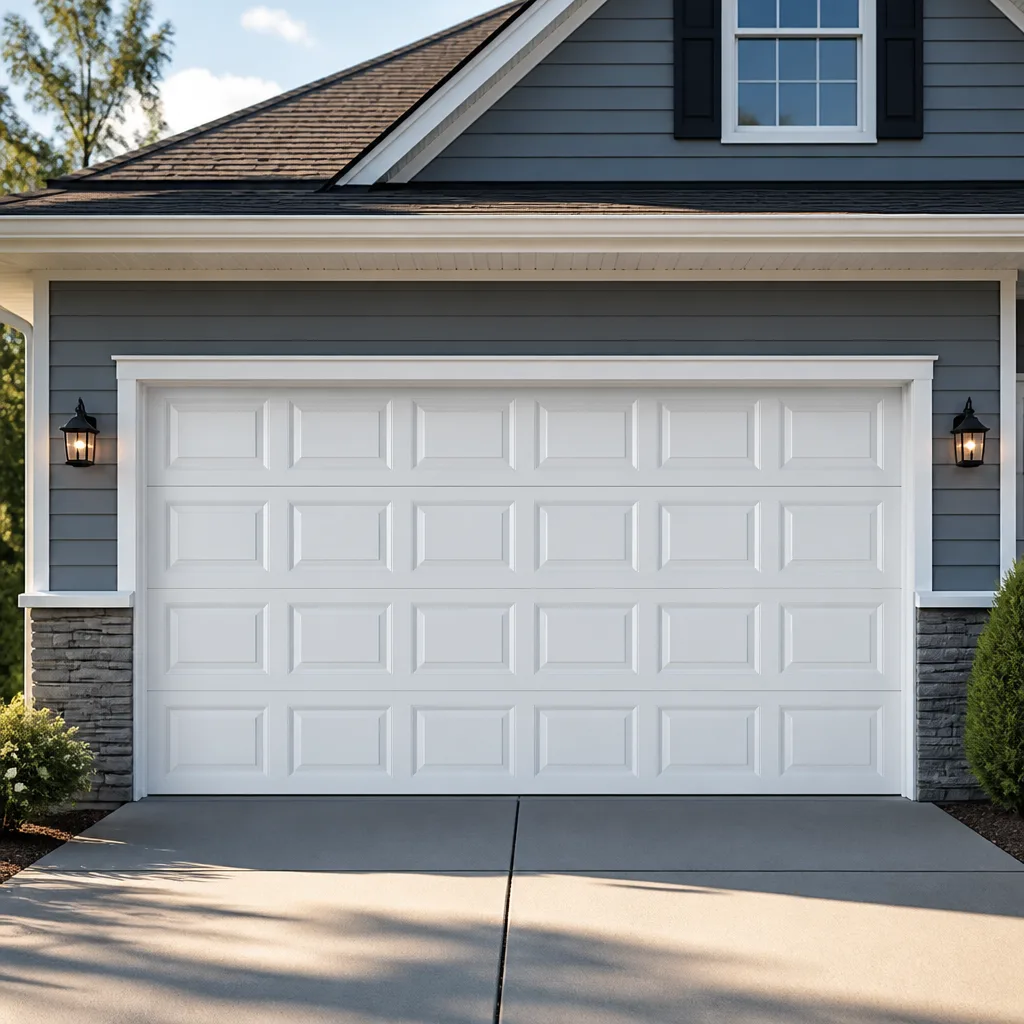
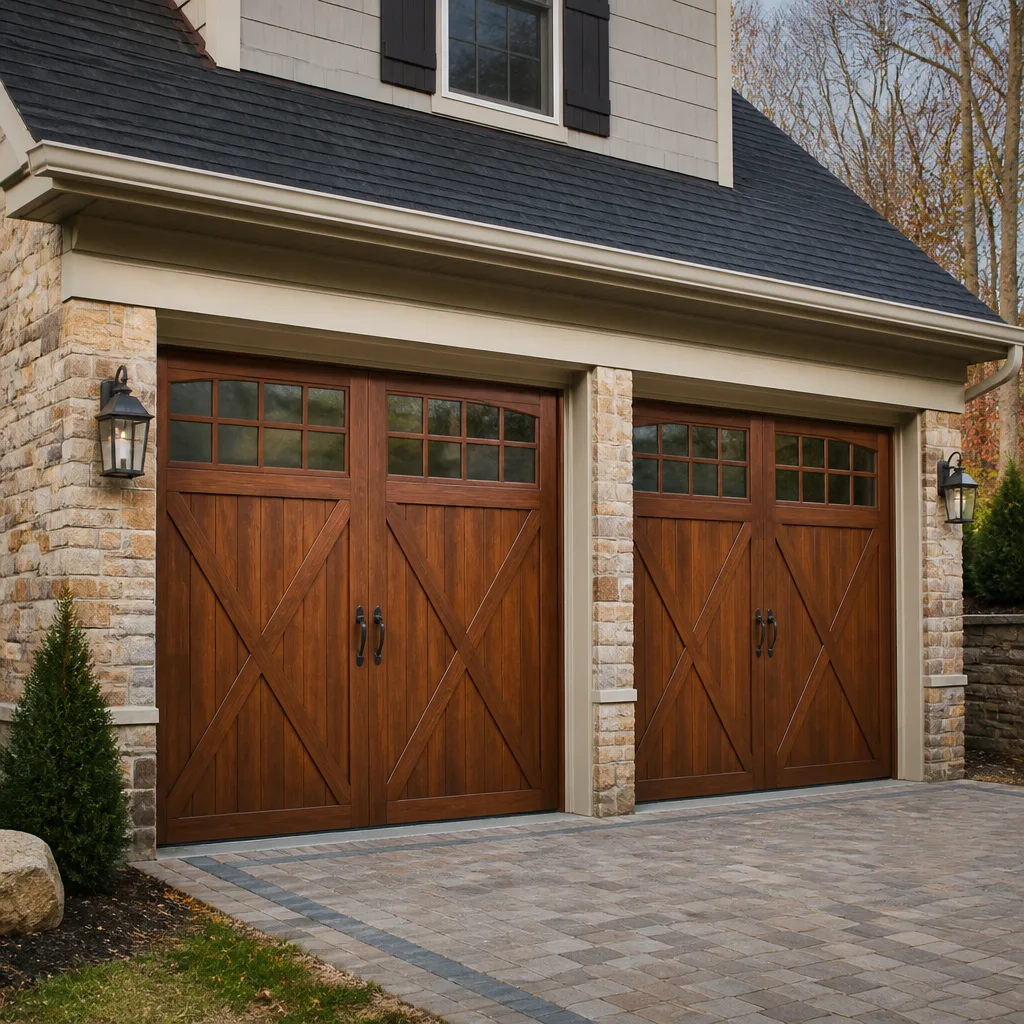
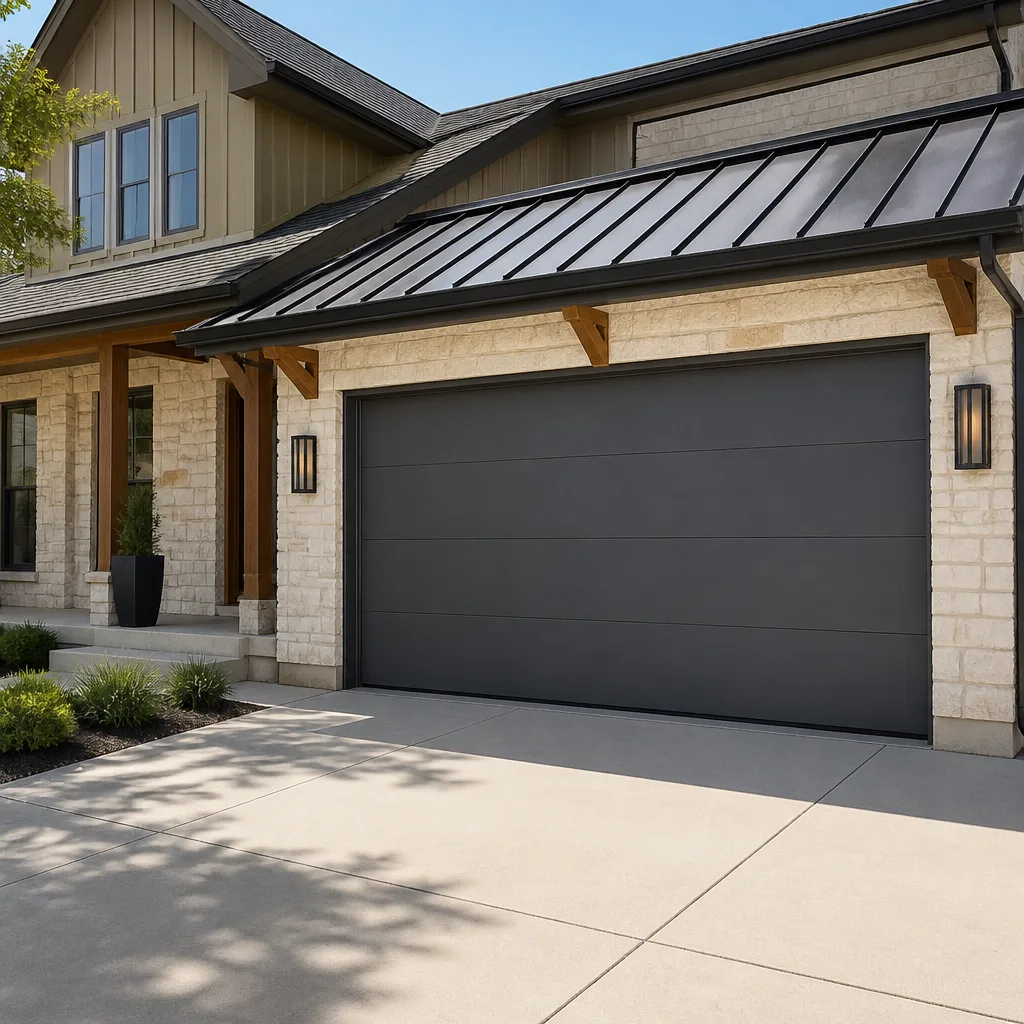
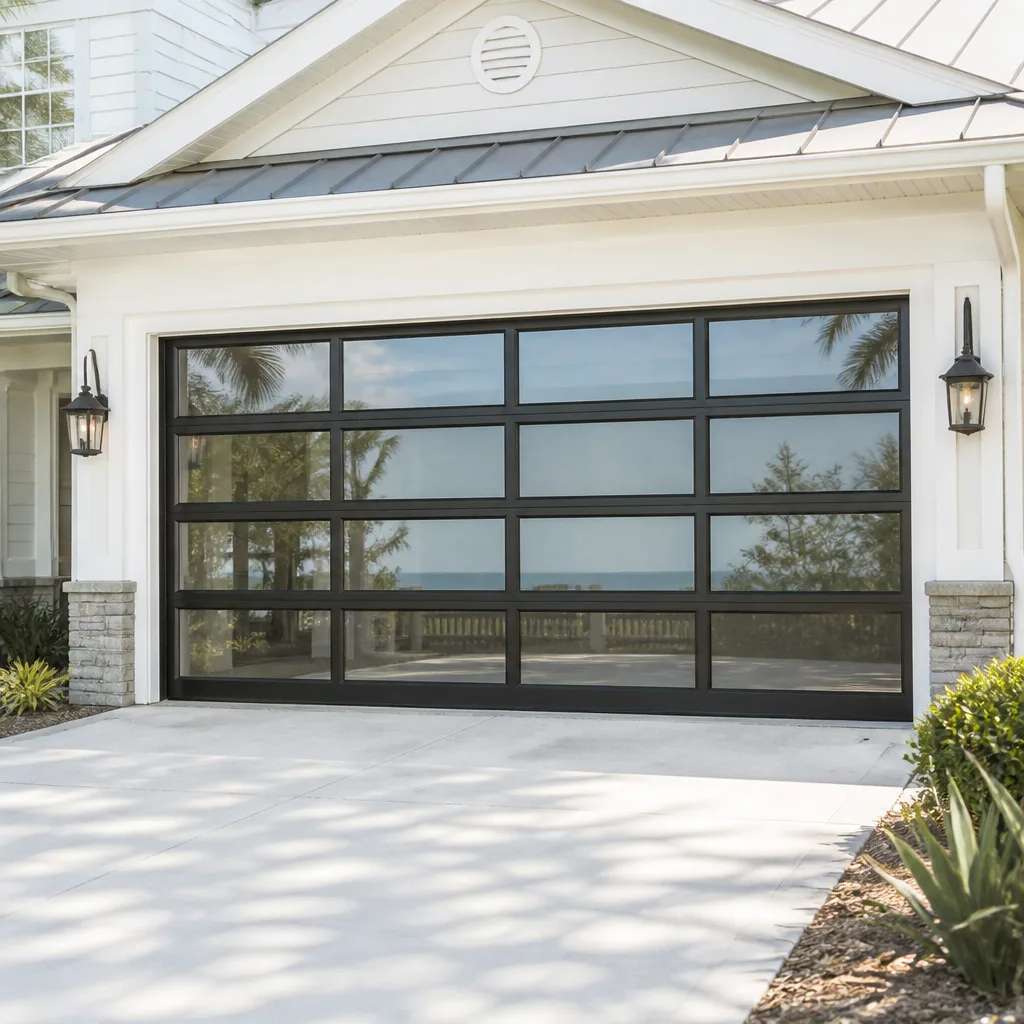
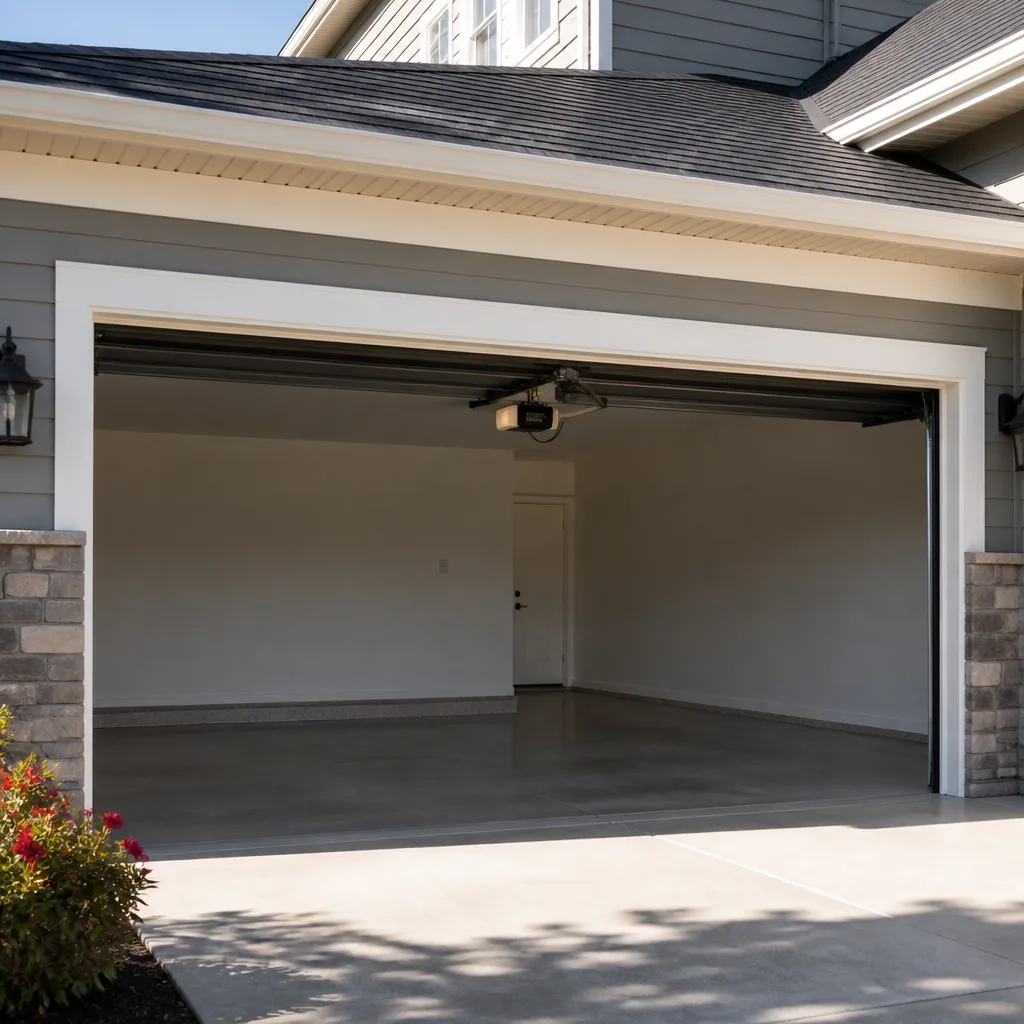
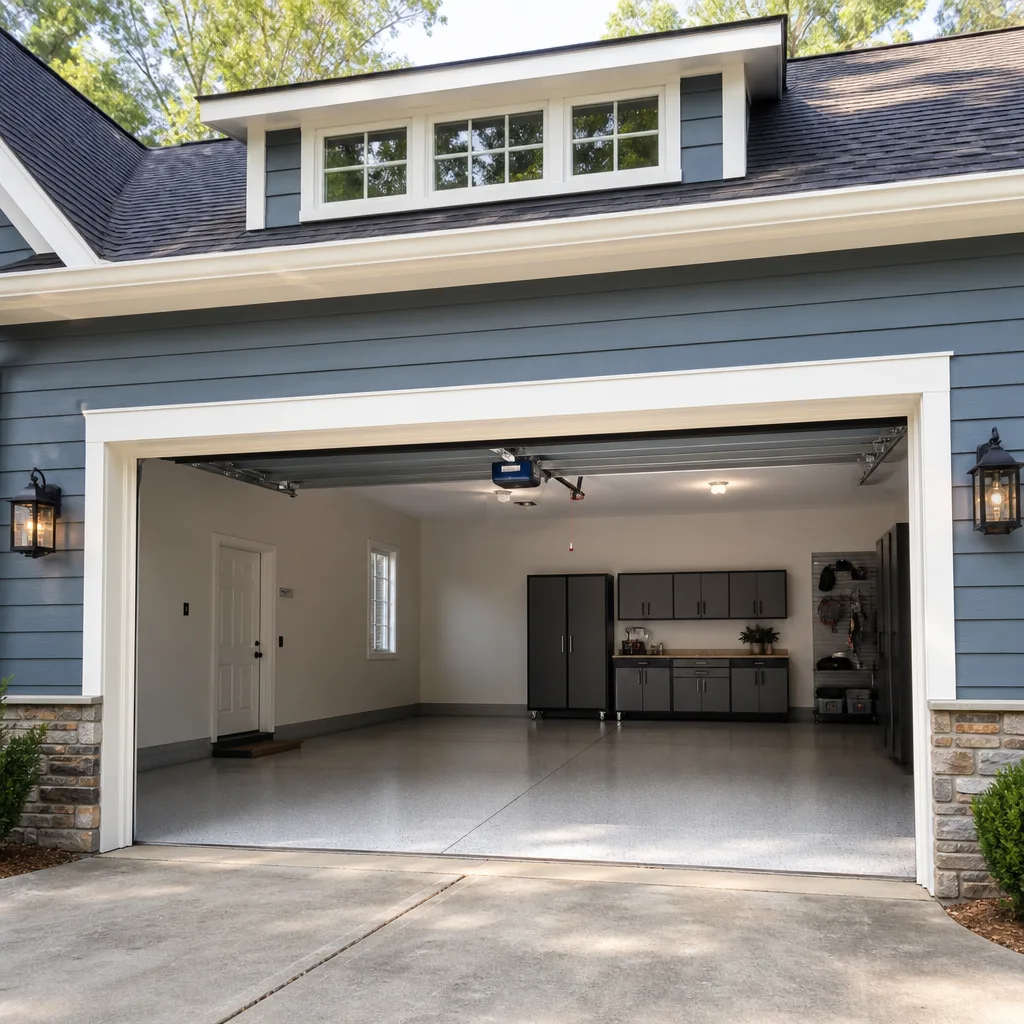
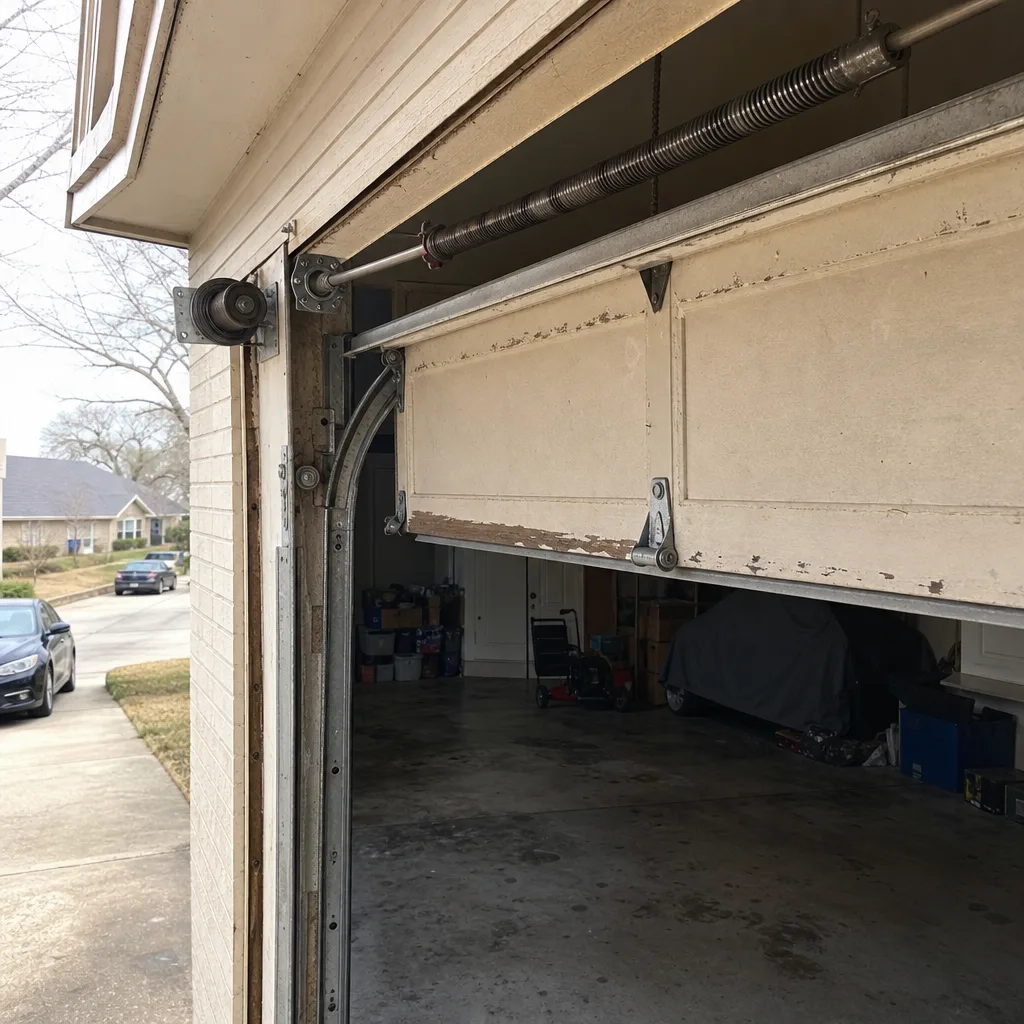 Before
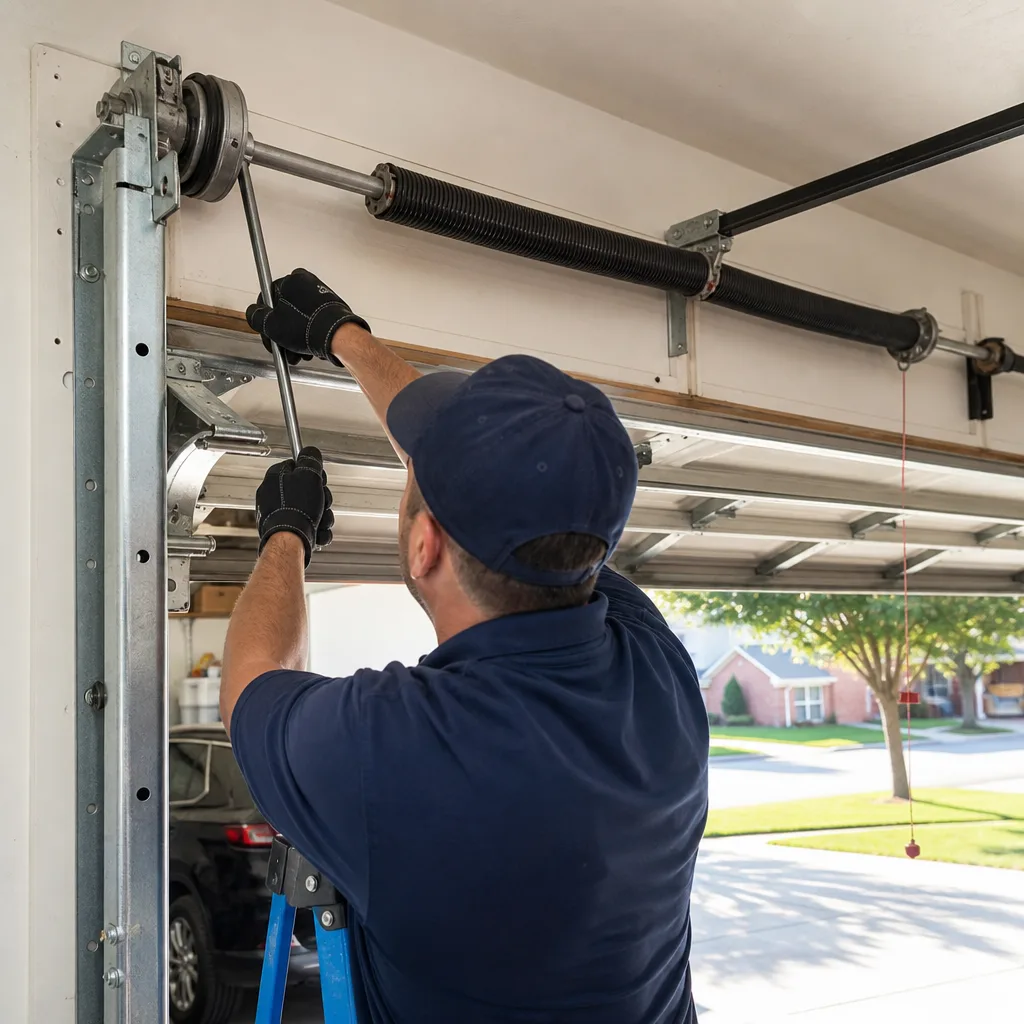 After
After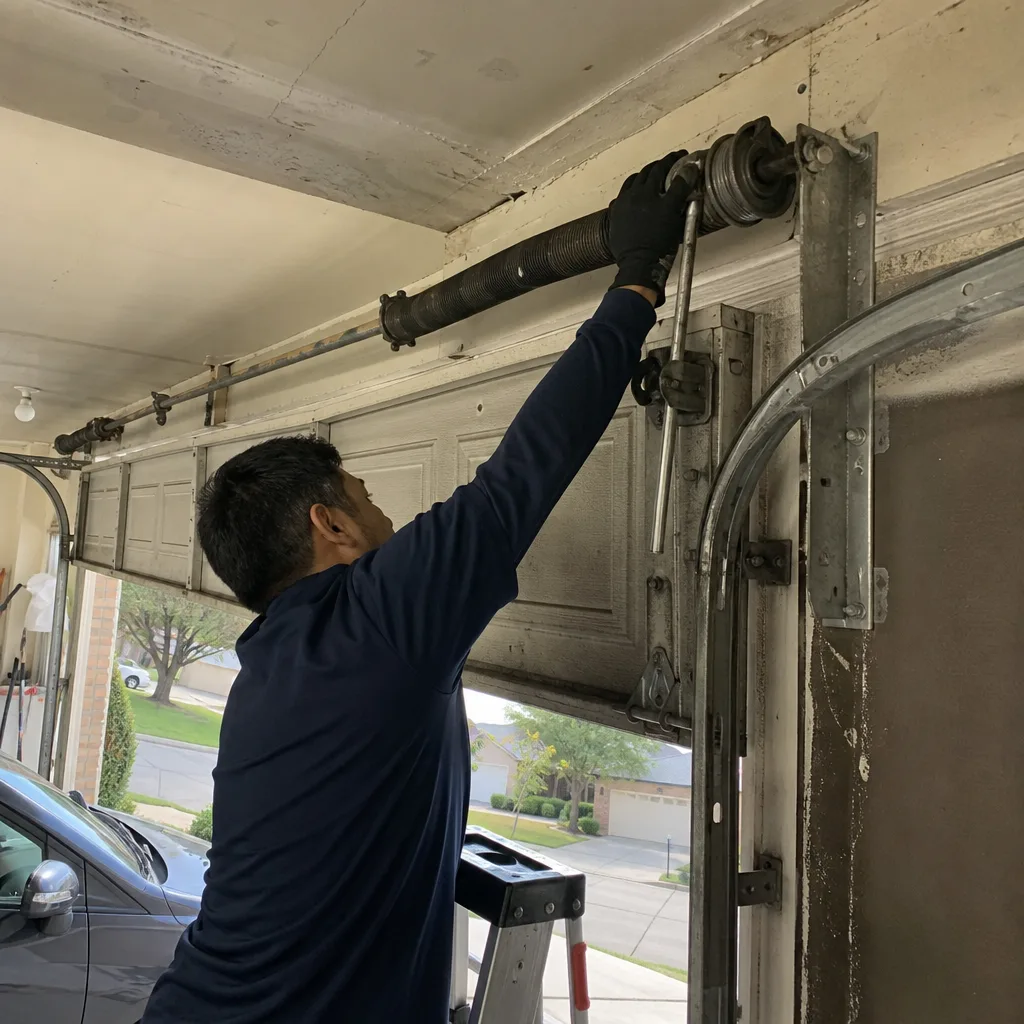 Before
 After
After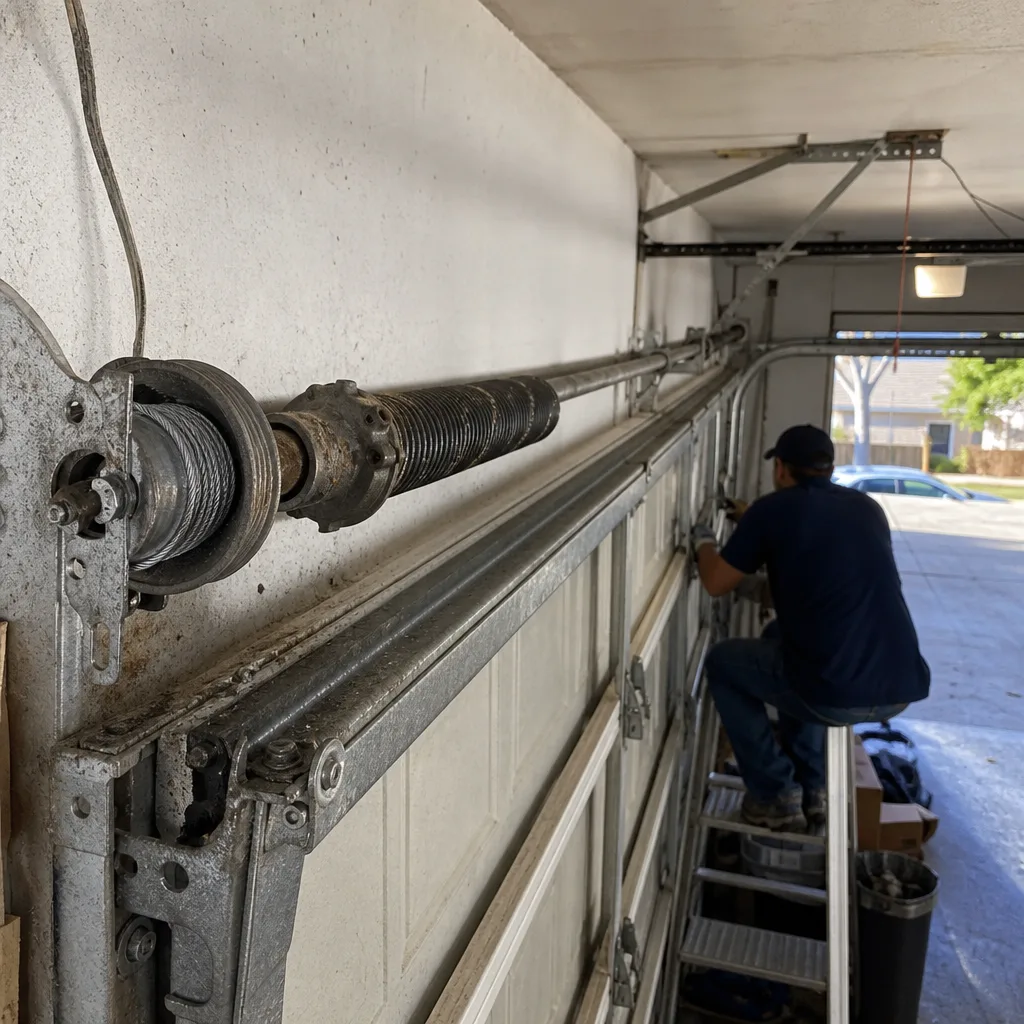 Before
 After
AfterThe Complete Guide to Garage Door in Lewisville
Your garage door gets used roughly 1,500 times a year. That’s more than your front door, your HVAC system, and your dishwasher combined. Most people in Lewisville can’t name a single part on that door until something snaps at 6 a.m. on a Tuesday and the car is trapped inside. This guide walks you through everything about the largest moving part of your home: what it is, how it works, what it costs, what breaks, and when to call someone who actually knows the difference between a torsion spring and an extension spring.
Quick Answer
A garage door in Lewisville is a system, not an appliance. It has roughly 12 major wear parts that need attention on a predictable schedule, and the two that fail most often here are the torsion springs and the opener’s drive gear, because North Texas heat accelerates metal fatigue and plastic degradation. You can extend the life of your door significantly with basic maintenance every 6 months, but spring replacement and anything involving the steel cable under tension should always go to a licensed professional, as we explain in our DIY vs Professional Garage Door: The Lewisville Homeowner’s Decision Guide.
Table of Contents
- How a Garage Door Actually Works
- How Lewisville’s Climate Affects Your Door
- Panel Materials: Steel, Wood, or Composite
- Builder-Grade vs. Mid-Grade: Does the Upgrade Pay Off?
- Garage Door Openers: Drive Type Matters More Than Horsepower
- How to Read an R-Value Label Honestly
- Permits in Lewisville: When You Need One
- Common Mistakes to Avoid
- When to Call a Professional
- Frequently Asked Questions
How a Garage Door Actually Works
Before you can make smart decisions about your garage door in Lewisville, you need to understand what you’re actually dealing with. A standard residential garage door weighs between 150 and 250 pounds. That weight doesn’t get lifted by the opener. The opener just provides the push. The real lifting is done by the springs.
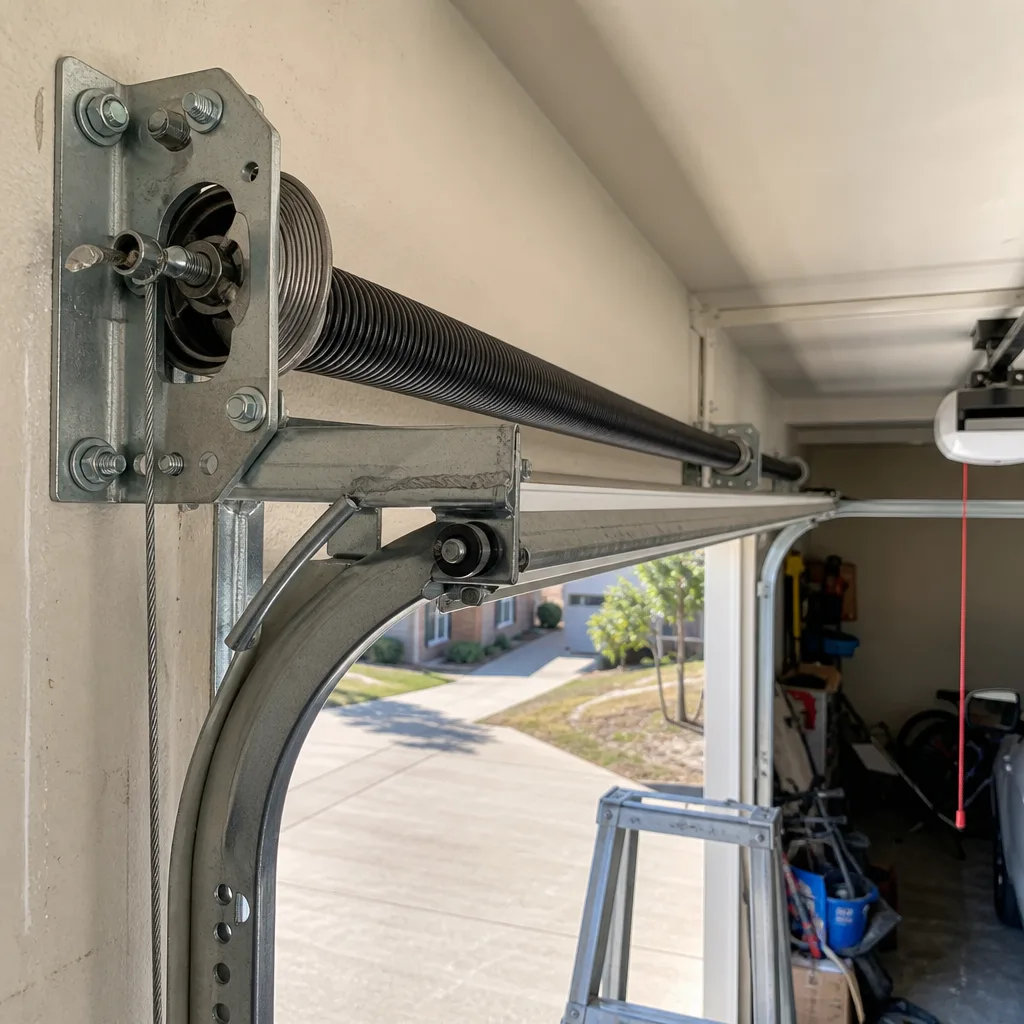
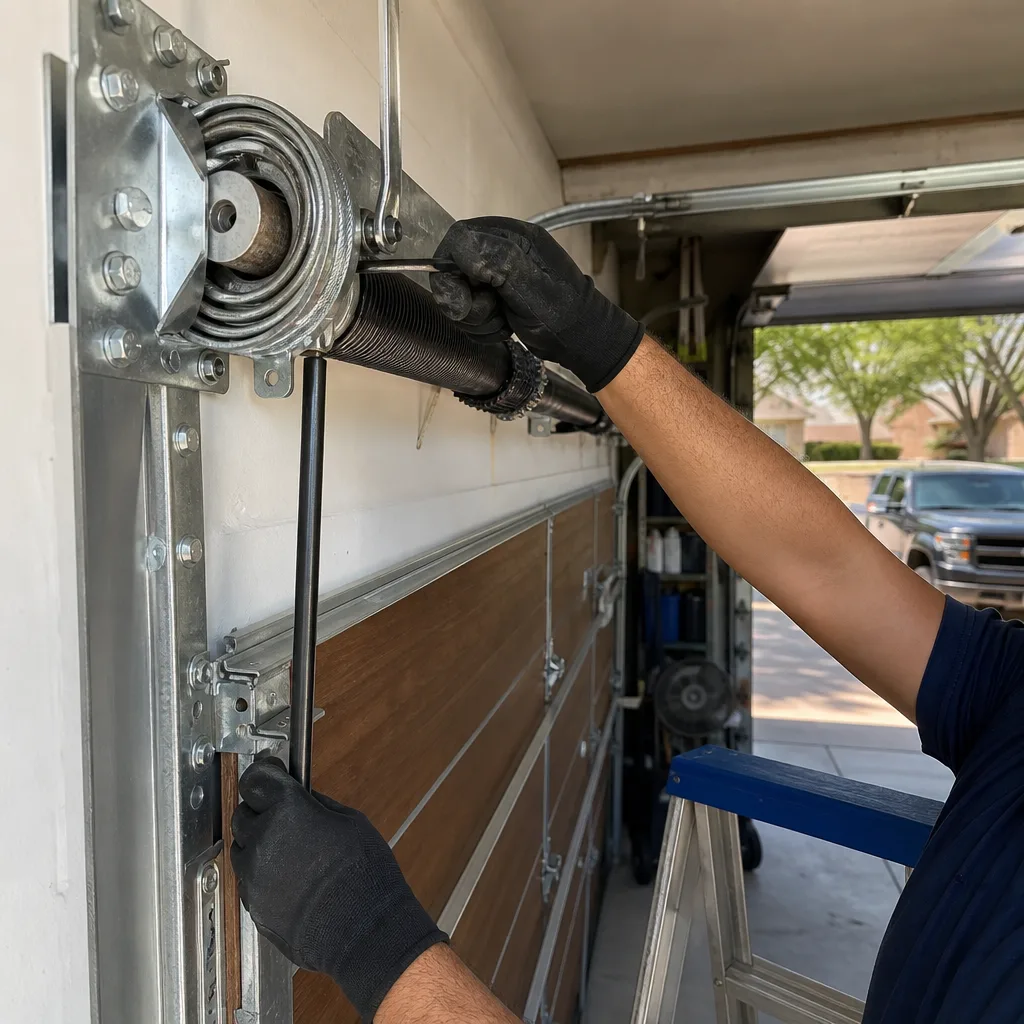
Most homes in Lewisville built after 1990 have torsion springs. These sit on a metal shaft above the door opening, and they store enormous amounts of tension. When you press the opener button, the springs unwind and transfer that stored energy through a system of cables, drums, and rollers, and the door rises along its tracks. When the springs are healthy and balanced correctly, the door feels almost weightless. When one spring breaks, the door becomes a deadweight, and the opener will burn itself out trying to lift it.
Here are the main components you should know by name:
- Torsion springs: The counterbalance for the door’s weight. Rated for a certain number of cycles that varies by quality. Every time the door opens and closes, that’s one cycle.
- Cables: High-tension steel cables that carry the spring’s energy to the bottom of the door. When these snap, the door can drop violently.
- Rollers: Wheel assembly inside the door tracks. Nylon rollers run quieter than steel and are the standard in mid-grade and better.
- Hinges: Connect the door panels and allow the door to bend as it travels.
- Opener: The motorized unit with a drive system that actually moves the door. It should never have to work against an unbalanced door. If it does, it dies early.
- Safety sensors: The photo eyes near the floor that stop the door from closing on a child, a pet, or your bumper.
- Weather stripping: The rubber strips along the bottom and sides that keep rain, heat, and pests out.
We count spring cycles the way you count tire miles. Every door we service in Lewisville, we can tell you roughly how many cycles are left on your springs just by looking at them. A door that gets opened four times a day, 365 days a year, puts 1,460 cycles per year on the springs. Standard springs are rated for about 10,000 cycles, which sounds like a lot until you realize that’s roughly 7 years of normal use for a two-car household.
If you want the full breakdown of how a repair works from diagnosis to parts, see our detailed page on Garage Door Repair in Lewisville. We walk through the exact process we follow when we arrive at your house, and what to expect on the invoice.
How Lewisville’s Climate Affects Your Door
Lewisville sits in a unique spot. We’re far enough from the Dallas core to get real summer heat reflection off concrete and asphalt, but close enough to Lake Lewisville that humidity stays higher than you’d expect for North Texas. That combination of heat and moisture does specific things to a garage door. If you know what to look for, you can catch a problem before it becomes a call-out at nine at night.
Here’s what our climate does to each type of door:
Steel Doors
Steel doors are the most common in Lewisville, and for good reason: they’re affordable, they hold paint reasonably well, and they withstand the sun better than most materials. But they have two weaknesses here. First, the bottom panel traps moisture, especially if your driveway slopes toward the door. Water sits against the bottom seal, and over years that rusts the steel from the bottom up. Second, exposed steel on the inside face of the door can sweat in spring and fall when the garage is cold and the outside air is humid. That sweat runs down the panel and rusts the hinges. We regularly see doors in Highland Shores and Castle Hills with rusted bottom panels because the builder’s seal failed and nobody replaced a $25 strip of weather stripping.
Wood Doors
Wood doors are gorgeous, and they belong on a certain style of house. But Lewisville is a hard place to keep a wood door. The heat attacks the finish. The humidity attacks the glue joints. The seasonal movement between hot-wet and cool-dry weather opens the seams between panels, and once water gets behind the finish, the wood starts to rot from the inside out. A wood door in Lewisville needs refinishing every 2 to 3 years, not the 4 to 5 you’d get away with in a drier climate. If you love the look, buy a composite that mimics wood grain. If you already own a wood door, budget for maintenance like you would for a deck.
Composite and Fiberglass Doors
Composite doors are built for this climate. They don’t rot, they don’t rust, and the finish is a polymer layer that’s rated for direct sun exposure. The downside is cost, which we get into below. If you have a south-facing or west-facing garage door in Lewisville that takes full afternoon sun, composite is worth looking at seriously. Steel doors on west-facing garages in our area consistently show panel fade and paint deterioration 3 to 5 years earlier than east-facing doors on the same street.
The other climate factor nobody thinks about: your garage door tracks. The metal track expands and contracts with temperature. In a standalone garage that isn’t climate-controlled, the track can shift enough over a decade to bind the rollers. We fix more track alignment issues in Lewisville garages in August and January than in any other months. If your door is jamming or making a grinding sound at the extremes of the season, it’s probably the track, not the opener.
Panel Materials: Steel, Wood, or Composite
Choosing a panel material is the first decision in any Garage Door Installation in Lewisville, and it’s the one that determines everything downstream: maintenance, longevity, energy performance, and resale value. Here’s the straight comparison, with Lewisville numbers.
Steel, 24-gauge (builder grade): The door that probably came with your house. $800 to $1,500 installed. Rated to last 15 to 20 years in Lewisville’s climate if maintained. No insulation to speak of, usually R-6 at best. These doors dent when a basketball hits them hard, and the paint fades noticeably on west-facing elevations. They’re not bad doors. They’re just entry-level doors.
Steel, 26-gauge (mid-grade and better): Counterintuitively, lower gauge number means thicker steel. A 26-gauge door is noticeably more resistant to dents. $1,500 to $3,000 installed, depending on insulation and panel design. These doors typically carry a 20- to 30-year warranty and hold their finish much better. If we’re replacing a door on a house in Lewisville that’s going to be sold in the next decade, this is where we tell people to look.
Wood: Custom, beautiful, expensive in both money and time. $3,000 to $8,000 installed. Needs refinishing every 3 years in our climate, and if you miss a cycle, you’re paying for a repair that costs more than the maintenance would have. We tell people to buy wood because they love wood, not because it’s practical. It’s like buying a convertible in Texas. You know what you’re signing up for.
Composite: The modern answer. $2,500 to $5,000 installed. These doors look like wood, resist denting, and carry warranties up to 30 years. Brands like Amarr and Clopay make composite and composite-look doors specifically for hot, humid climates like ours. The polymer coating doesn’t fade the way painted steel does. If you live in a home you plan to keep, and your garage faces south or west, composite is the lowest-lifetime-cost option.
One thing we tell every customer: don’t buy a door by the model name. Buy by the gauge, the insulation rating, and the spring cycle rating. Two doors can look identical and have a 10-year difference in expected life. Ask for the specs. If the salesperson can’t tell you the steel gauge and the cycle rating, walk.
Builder-Grade vs. Mid-Grade: Does the Upgrade Pay Off?
Most homes in Lewisville were built with the cheapest door the builder could source that still met code. That’s not an insult to your house, it’s just how subdivision building works. The builder’s budget goes into kitchens and bathrooms because that’s what sells. The garage door is an afterthought. But here’s the thing: the garage door is one of the first things a buyer sees when they pull up, and it’s one of the few home components where a small dollar difference gets you a big quality difference.
Let’s run the actual math for a typical Lewisville two-car garage:
- Builder-grade door: $900 installed. Lasts 12 to 15 years in our climate. R-value of 6. No sound dampening. Springs rated for 7,000 cycles, meaning they’ll break around year 5 or 6 and cost $250 to $350 to replace. Over 15 years, that’s one spring replacement, one or two dent repairs, repainting, and a door that looks tired by year 10. Total lifetime cost: roughly $1,800 to $2,300.
- Mid-grade door (26-gauge, insulated, mid-level springs): $2,200 installed. Lasts 25 to 30 years in our climate. R-value of 12 to 16. Springs rated for 15,000 to 20,000 cycles, meaning they’ll survive past year 15 for most households. Holds its finish. Total lifetime cost: roughly $2,200 plus one spring replacement at year 15 or so. Call it $2,600 all-in.
So the mid-grade door costs roughly $400 to $600 more over its lifetime, but you get a door that looks better, opens quieter, insulates better, and doesn’t need to be replaced again for a generation. That’s the math the builders don’t want you to do, because it reveals the cheap door isn’t cheaper. It’s just deferred.
We’ve replaced builder doors on Lewisville houses that were 8 years old and already rusted through at the bottom panel. The homeowner paid $900 for the door, $350 for the spring, and now another $2,000 for the replacement, and they’re still out less than they would have been if they’d just bought the good door first. Except now they’ve had a rusty, drafty, ugly door for 8 years.
Garage Door Openers: Drive Type Matters More Than Horsepower
Walk into any big-box store and you’ll see openers marketed by horsepower: half-horse, three-quarter-horse, one-horse. Here’s the truth from someone who installs these every week in Lewisville: the difference between a half-horse and a three-quarter-horse motor is almost never the reason your opener fails. The drive type is. And in a Texas summer, the drive type determines whether your opener sounds like a coffee grinder or a refrigerator.
There are three drive types:
- Chain drive: A metal chain pulls the door along a rail. It’s loud. It’s cheap. It’s what 70% of Lewisville homes have. The chain stretches over time and needs tensioning. In an attached garage, the noise travels straight into the master bedroom if that room sits over or near the garage. Chain drives are fine for detached garages or if you genuinely don’t care about noise. They are not fine for a nursery above the garage.
- Belt drive: A reinforced rubber belt instead of a chain. Same pulling power, dramatically quieter. A belt drive opener from Chamberlain or LiftMaster runs so quietly you can have a conversation in the garage while it’s operating. Costs about $100 to $150 more than an equivalent chain drive. Worth it for attached garages.
- Screw drive: A threaded steel rod rotates to move the carriage. Fast and powerful, but the screw needs regular lubrication, and in hot climates the grease has to be rated for high temperatures or it thins out and the opener works harder. Fewer moving parts, which some people like, but we see proportionally more screw drives gummed up in Lewisville than either chain or belt drives.
What actually matters for longevity in our climate: the opener’s internal gear. Most opener failures we see aren’t motor failures. They’re plastic gear failures. The drive gear inside the opener housing is made of nylon or a nylon composite, and when the door is out of balance or the tracks are binding, that gear strips. The motor was fine. The 80-cent gear died because the door was making the opener work twice as hard as it should. If your opener is straining, Garage Door Opener in Lewisville repair usually means replacing that gear, not the whole unit. But you have to fix the door balance too, or you’ll strip the new gear in six months.
So when you’re shopping, here’s the honest hierarchy: first, make sure your door is balanced. Second, choose belt drive if it’s an attached garage. Third, get a name-brand opener with replacement parts available locally, which means LiftMaster, Chamberlain, or Genie in our market. Horsepower is a distant fourth. A belt-drive half-horse opener on a balanced door will outlast a chain-drive one-horse opener on an unbalanced door every time.
How to Read an R-Value Label Honestly
R-value is a measure of thermal resistance. Higher numbers mean better insulation. A builder-grade garage door in Lewisville has an R-value between 3 and 6, which is barely better than a single sheet of plywood. A good insulated door runs 12 to 16. The best insulated doors hit 18 or higher. But here’s what the label doesn’t tell you, and what most salespeople won’t volunteer: the R-value rating is for the entire door assembly, not the individual panels, and it’s tested in a lab, not in your specific garage.
What an insulated door actually does for an attached Lewisville garage:
- Moderates the heat. An attached garage in August can hit 120 degrees with an uninsulated door. An insulated door drops that by 10 to 20 degrees. It’s still hot in there, it’s just not a pizza oven.
- Protects the room above the garage. If you have a bedroom or bonus room over the garage, an insulated door is the single best improvement you can make to that room’s comfort. The garage ceiling is the weakest thermal barrier in the house.
- Quiets the door. Insulated doors are heavier, so they don’t rattle and shimmy the way lightweight doors do. They feel solid.
- Stands up to dents better. Insulation fills the hollow cavity, so the panel resists denting from the inside and outside.
What an insulated door does NOT do:
- It does not turn your garage into living space. The garage is still unconditioned, unsealed, and attached to the outside air through the vents and gaps around the door.
- It does not substitute for insulating the garage walls and ceiling. If you care about the garage temperature, insulate the whole envelope, not just the door.
- It does not justify paying a $900 premium for an extra R-4. The difference between R-12 and R-16 is real but marginal in Lewisville’s climate. The difference between R-6 and R-12 is dramatic. Spend your money getting from uninsulated to insulated, not from well-insulated to slightly-more-well-insulated.
Permits in Lewisville: When You Need One
This is the question nobody asks until the house is under contract and the inspector flags the garage. Here’s a straightforward answer for the City of Lewisville, and for full details see our guide to Garage Door Permits, Codes & Inspections in TX: What You Need to Know.
For a like-for-like replacement, meaning you’re taking out an existing garage door and putting in a new one of the same size in the same opening, you generally do not need a building permit in Lewisville, since the opening already exists and the structural loading doesn’t change. That covers most residential garage door replacements we handle.
You may need a permit in these situations:
- You’re widening or enlarging the opening. If you’re converting a single-car door to a double-car door, you’re cutting into the exterior wall and changing the structural header. That’s a building permit and probably an engineering letter. Don’t let anyone tell you otherwise.
- You’re cutting a new opening where one didn’t exist. Adding a garage door to an exterior wall that never had one. Structural work, definitely a permit.
- You’re converting a carport into a garage. That’s a change of use and a structural enclosure. Permit required.
- Your HOA has its own rules. Castle Hills, Highland Shores, and several other Lewisville-area HOAs have architectural review requirements for door changes, especially if you’re changing the color, material, or style. The city permit is separate from the HOA approval. Both matter.
The practical advice: if the new door fits in the same hole and changes nothing structural, you’re almost certainly clear. If you’re cutting anything, enlarging anything, or building anything new, pull the permit. It costs a few hundred dollars and it protects you when you sell. We’ve seen Lewisville home sales held up because a previous owner enlarged a garage opening without a permit and the inspector caught it. The fix was thousands of dollars and weeks of delay. The permit would have been $400.
For anything involving a new door, Otto’s Garage Door home can walk you through the permit question as part of the estimate. We handle it all the time.
Common Mistakes to Avoid
- Ignoring a noisy door until it stops moving. A screech or a bang is the door telling you something specific. Ignore it and the $30 repair becomes a $600 repair. We hear it every week in Lewisville: “It made that noise for months and then it just stopped.” The spring broke. It was going to break either way, but the months of grinding damaged the rollers, the cables, and sometimes the opener.
- Lubricating your springs with WD-40. WD-40 is not a garage door lubricant. It’s a water displacer. It cleans gunk off metal, but it doesn’t lubricate the coil-to-coil contact on a torsion spring. Use white lithium grease on the spring, and silicone spray on the rollers and hinges.
- Replacing the opener before checking the door balance. We covered this above. An unbalanced door kills a new opener. Pull the release handle and lift the door manually. If it doesn’t stay in place halfway up, the door is out of balance and the opener wasn’t your main problem.
- Buying the cheapest springs. A $199 spring deal sounds great until the spring is rated for 2,000 cycles and breaks two years later. Quality springs rated for 20,000+ cycles cost more upfront and are dramatically cheaper per cycle. Ask for the cycle rating on the springs. If you can’t get a straight answer, that’s your answer.
- Attempting DIY spring replacement. The springs on a Lewisville garage door are under enough tension to kill or maim you if they release wrong. This is the one repair where we tell people flatly: do not do this yourself. Even people with mechanical backgrounds get hurt because they don’t understand the specific loading on a torsion spring. Call a licensed professional.
- Painting over rust without treating it. That $12 can of spray paint buys you six months of looks. The rust is still underneath, eating the steel. You have to remove the rust, treat the metal, prime, and then paint. Or better, replace the bottom panel before the rust spreads to the track brackets.
- Using the wrong length for the bottom seal. Buy a universal seal, cut it to the exact width of the door, and install it in one piece. When we replace doors in Lewisville, the most common previous-owner shortcut we find is a bottom seal pieced together from leftover chunks, which leaks air, water, and mice. It takes 20 minutes to do it right.
When to Call a Professional
There are garage door tasks you can handle yourself: replacing the weather stripping, tightening loose hinge bolts, lubricating the rollers and springs, repainting the panels, replacing the remote battery. Everything on that list is low-risk and forgiving. There are other tasks where the risk equation changes fast, and you should call someone who does this work every day. Call a professional when a torsion spring breaks (the loud bang from the garage, and the door becomes a deadweight). Call when a steel cable snaps or frays, because the door can drop unpredictably. Call when the door comes off its tracks, because a hanging door can fall. Call when the opener behaves erratically despite fresh sensors and a balanced door, because the controller board is probably failing. And call when you want an honest second opinion on a quote you’ve received from someone else, because that’s free. Otto’s Garage Door offers free estimates in Lewisville, call (945) 777-4998, and if you have a written estimate from another company, bring it. Otto will tell you if it’s fair, and he’ll hold his own number to the driveway.
Frequently Asked Questions
A new garage door in Lewisville typically costs between $900 and $3,000 installed for a standard two-car door, depending on the material, insulation, and spring quality. For a deeper dive, see our Garage Door Cost Breakdown: The Lewisville Homeowner’s Reference for 2026. A basic builder-grade door runs $900 to $1,500, a good mid-grade steel door runs $1,500 to $2,500, and a composite or custom wood door starts around $2,500 and goes up from there. That price should include the door, tracks, springs, installation, and haul-away of the old door. Call (945) 777-4998 for a fixed written quote on your specific door.
A standard torsion spring in Lewisville lasts 7 to 10 years for a typical household that opens the door 3 to 4 times a day. Springs are rated in cycles, not years, and the standard spring installed by most builders is rated for 7,000 to 10,000 cycles. Higher-quality springs rated for 20,000 cycles or more last 15+ years for the same usage. If your springs are original and your house was built before 2015, budget for replacement soon.
Yes. For a broken spring, a snapped cable, or a door off its tracks, we schedule same-day calls in Lewisville and most of the surrounding county. A live person answers at (945) 777-4998 around the clock, and Otto quotes the repair on that call and holds the number when he gets there.
No. The price quoted on the phone is the price on the invoice, period. If we find additional damage after we’re on site, we show you the problem, quote the added work, and do nothing until you approve it. The 90-Day Done Right Promise is written on every invoice, and it means what it says.
Yes. We service and install LiftMaster, Chamberlain, Genie, Clopay, Amarr, Wayne Dalton, Craftsman, and Raynor doors and openers. We carry common replacement parts on the truck, including springs, cables, rollers, sensors, and weather stripping. If a part is specific to your door and we don’t have it on the truck, we can usually source it same day or next day from our local suppliers.
For most like-for-like replacements, no permit is required in Lewisville. If you’re enlarging the opening, cutting a new opening, or converting a carport, you’ll need a building permit. Your HOA may also require architectural review, even for a like-for-like swap. We can confirm the permit status for your specific situation during the estimate.
The Bottom Line
A garage door in Lewisville is the biggest moving part of your home, and it works harder than anything else you own. The good news is that it’s not mysterious once you understand the basics: springs do the lifting, climate dictates maintenance, materials determine lifespan, and the cheapest door is rarely the cheapest over time. Buy quality springs, keep the weather stripping fresh, don’t ignore noise, and never touch a spring or cable under tension. If you need a straight answer or a second opinion, check out our more guides & resources or call Otto at (945) 777-4998. He has been serving Lewisville since 2004, the name on the van is the name on the invoice, and the guarantee is written on every job.
Written by Otto Reinhardt, Owner at Otto’s Garage Door, serving Lewisville since 2004.