
Last updated September 10, 2026
Full 25-point door and opener safety check with every visit - springs, cables, rollers, tracks, and your LiftMaster or Chamberlain opener included
You get a price before we start. It does not change when the truck arrives.
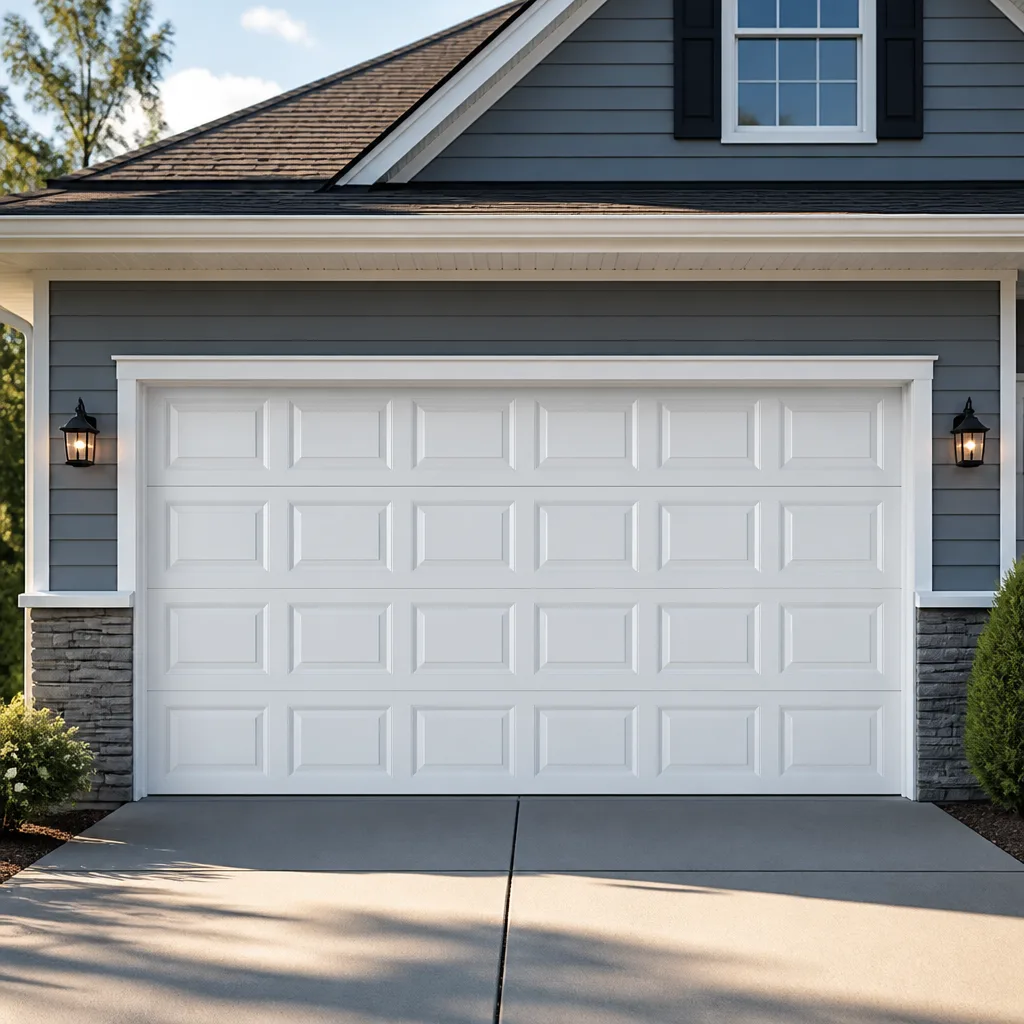
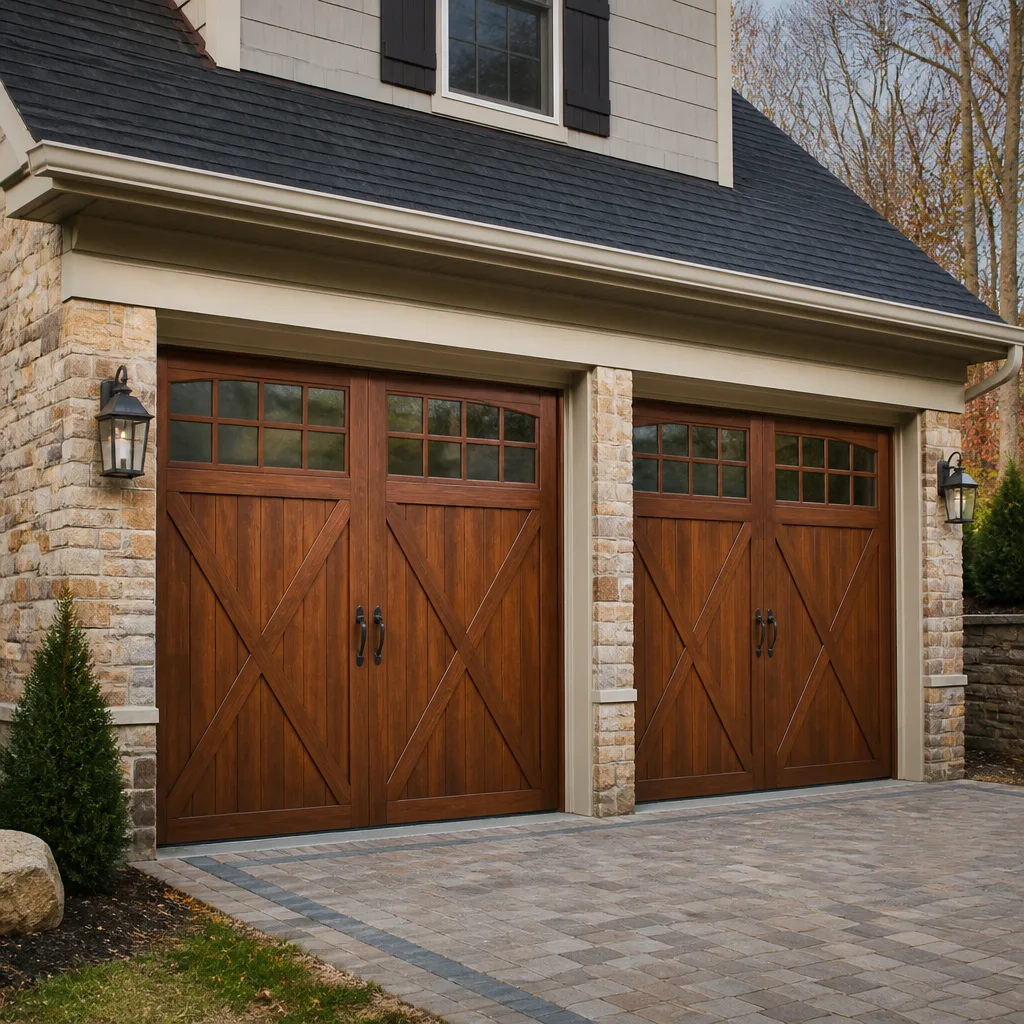
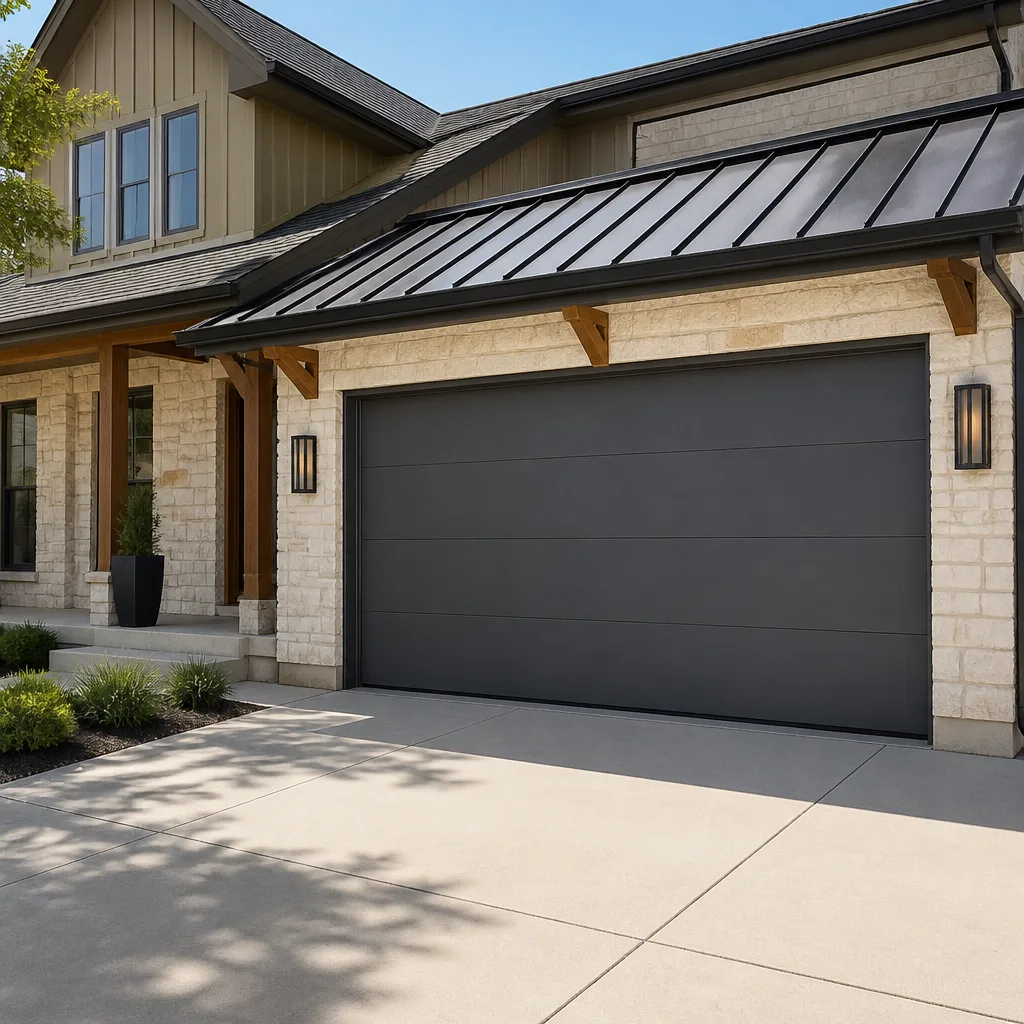
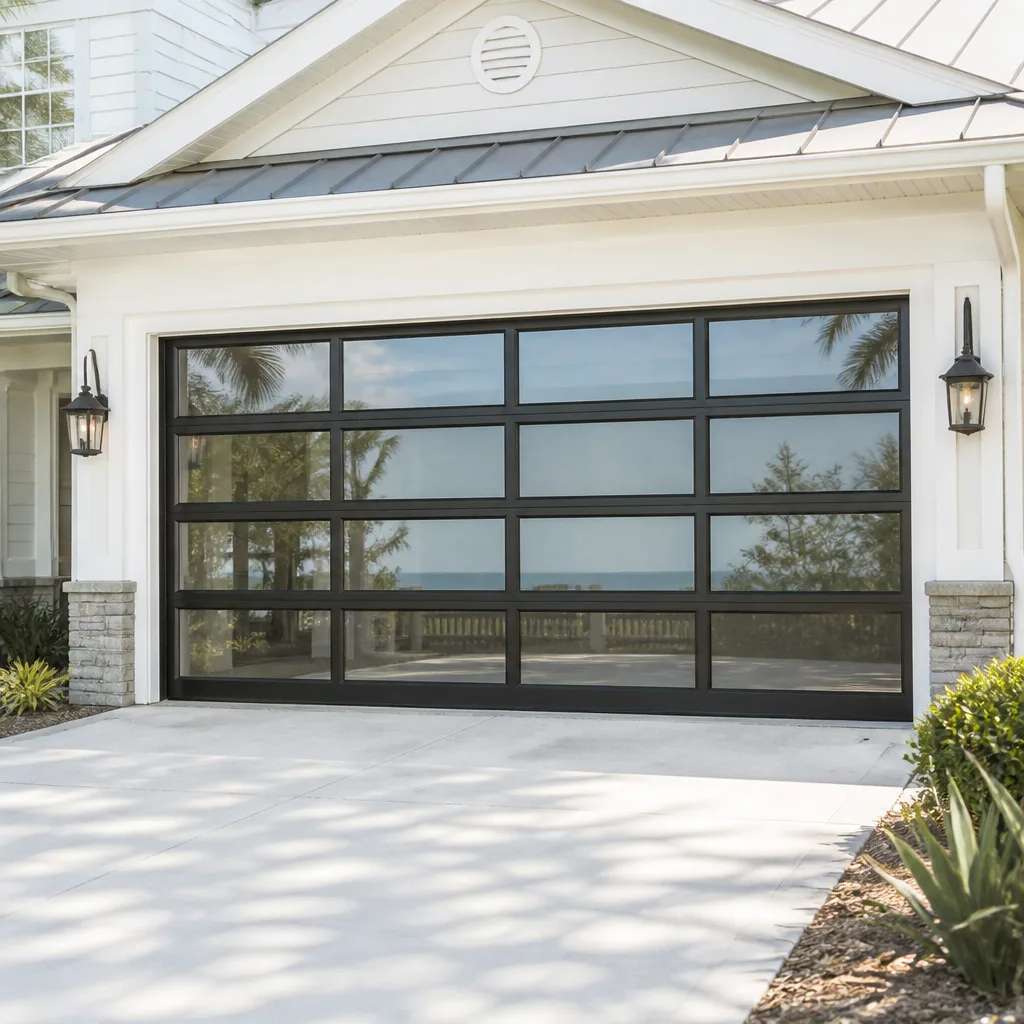
 Before
 After
After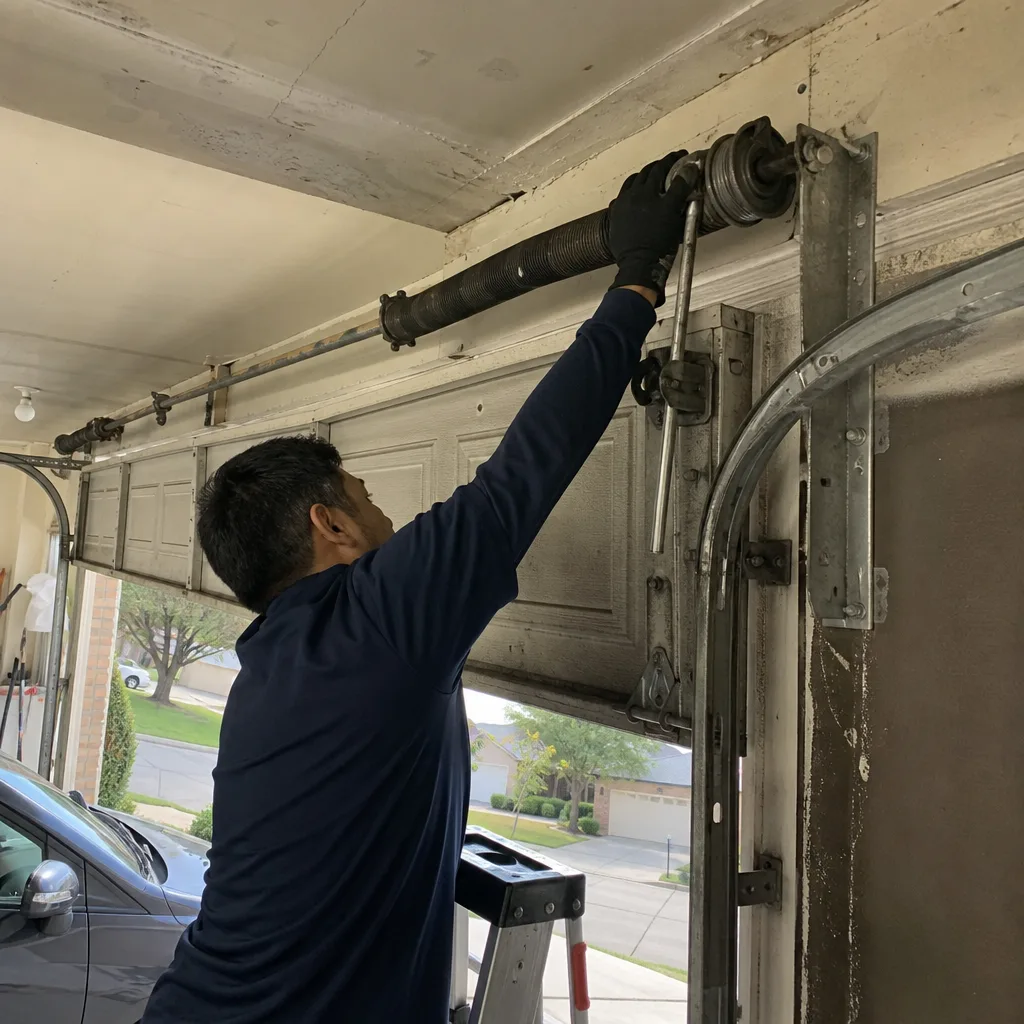 Before
 After
After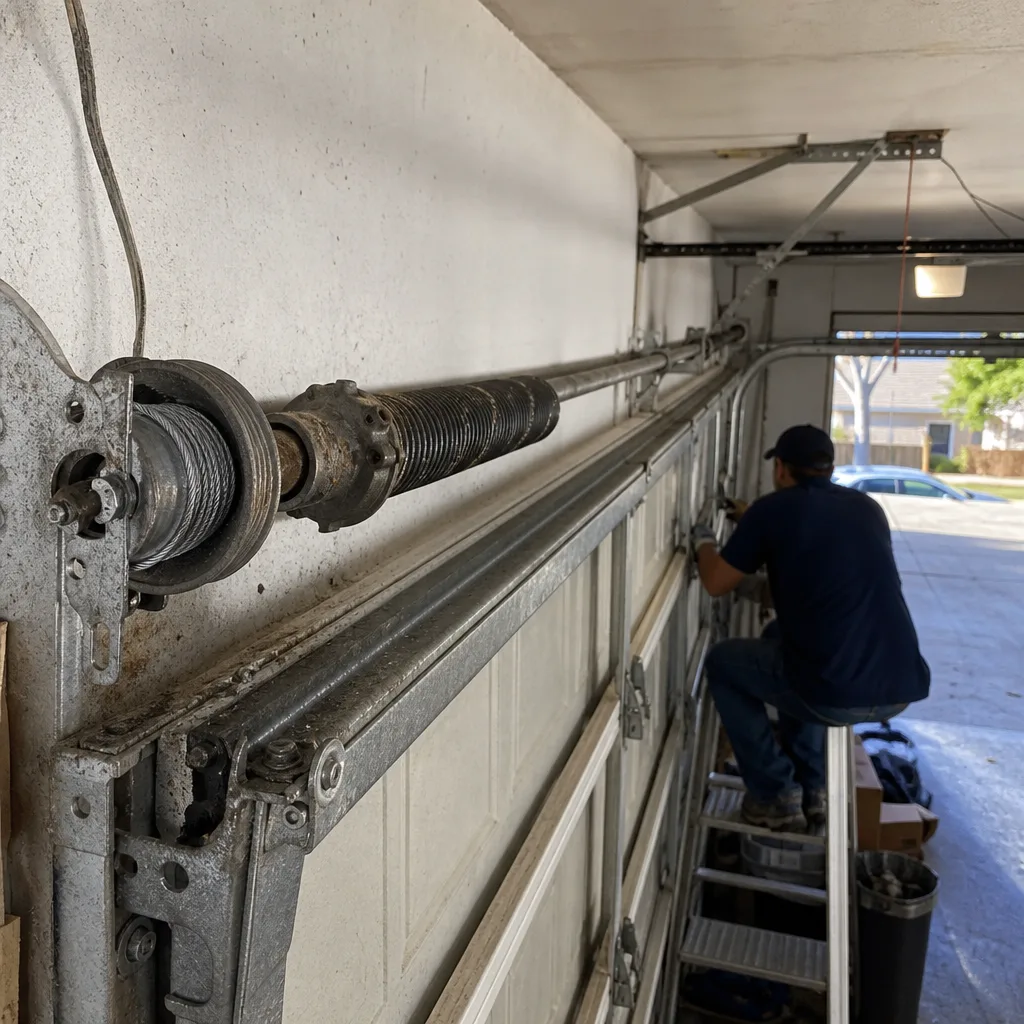 Before
 After
AfterSeasonal Garage Door Care for Lewisville: Year-Round Homeowner’s Guide
February is the most dangerous month for garage door hardware in Lewisville, and it’s not because of ice. It’s because the freeze-thaw cycle between warm afternoons and cold nights cycles metal components harder in thirty days than summer does in three months. A torsion spring that survives five August heat waves will snap on a 45-degree February morning because the steel has been expanding and contracting every single day for weeks. This guide maps the actual care tasks to what’s happening in your garage month by month, so you’re not following a generic checklist written for someone in Ohio. For a deeper dive, see The Complete Guide to Garage Door in Lewisville. We’ve been fixing doors in this town since 2004, and we know exactly when Lewisville doors break, why they break, and what a homeowner can do about it before the phone call becomes an emergency.
Quick Answer
Seasonal garage door care in Lewisville means inspecting your torsion springs every February before the freeze-thaw spike hits, lubricating rollers and hinges every March and October, checking weatherstripping before the April-May rain season, protecting your opener’s circuit board from summer heat above 95°F, and realigning photo-eyes in October when the lower sun angle starts causing false triggers. Done consistently, these five tasks prevent about 80% of the breakdowns we roll out for. Each takes under fifteen minutes and requires nothing more than a rag, a can of white lithium grease, and a flashlight.
Table of Contents
- February: The Freeze-Thaw Window That Snaps Springs
- March-April: Prepping Weatherstripping for Lewisville’s Wet Spring
- May-September: Why Heat Above 95°F Kills Opener Circuit Boards
- Summer Cooling: How Door Insulation Affects Your AC Load
- October: Photo-Eye Alignment Before the Low Winter Sun
- The Twice-a-Year Lubrication Routine That Doubles Hardware Life
- Month-by-Month Checklist for Lewisville Homeowners
February: The Freeze-Thaw Window That Snaps Springs
Here’s what we see every single February in Lewisville: a homeowner calls us at seven in the morning, the garage door won’t open, and there’s a two-inch gap where the torsion spring used to be. The spring didn’t fail because it was cold. It failed because it had been cold at night and warm in the afternoon for three straight weeks. Steel expands when it warms and contracts when it cools. A torsion spring on a standard Lewisville two-car door is under about 200 pounds of tension every second of every day. When the metal is flexing through thermal cycles on top of that, hairline fatigue cracks that formed over years of use finally propagate. February is when they let go.
What to do before February hits:
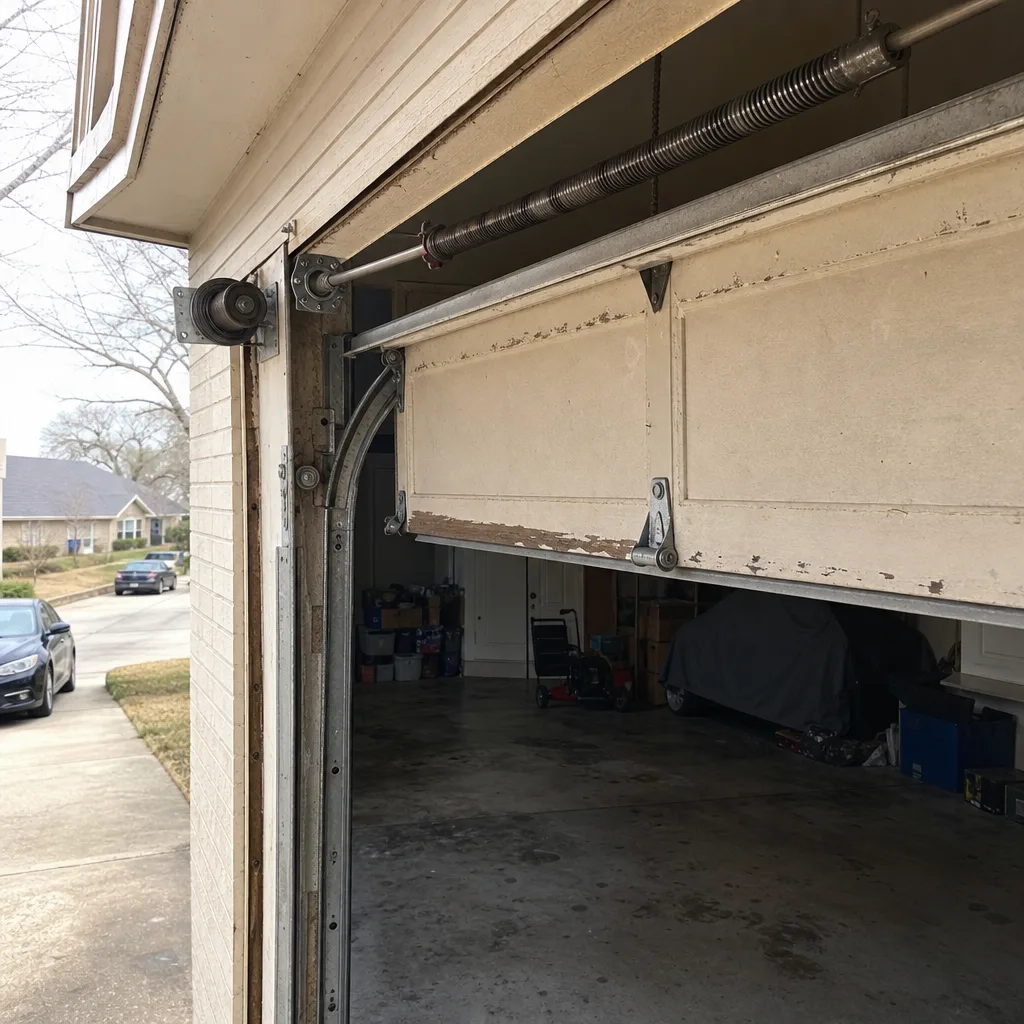
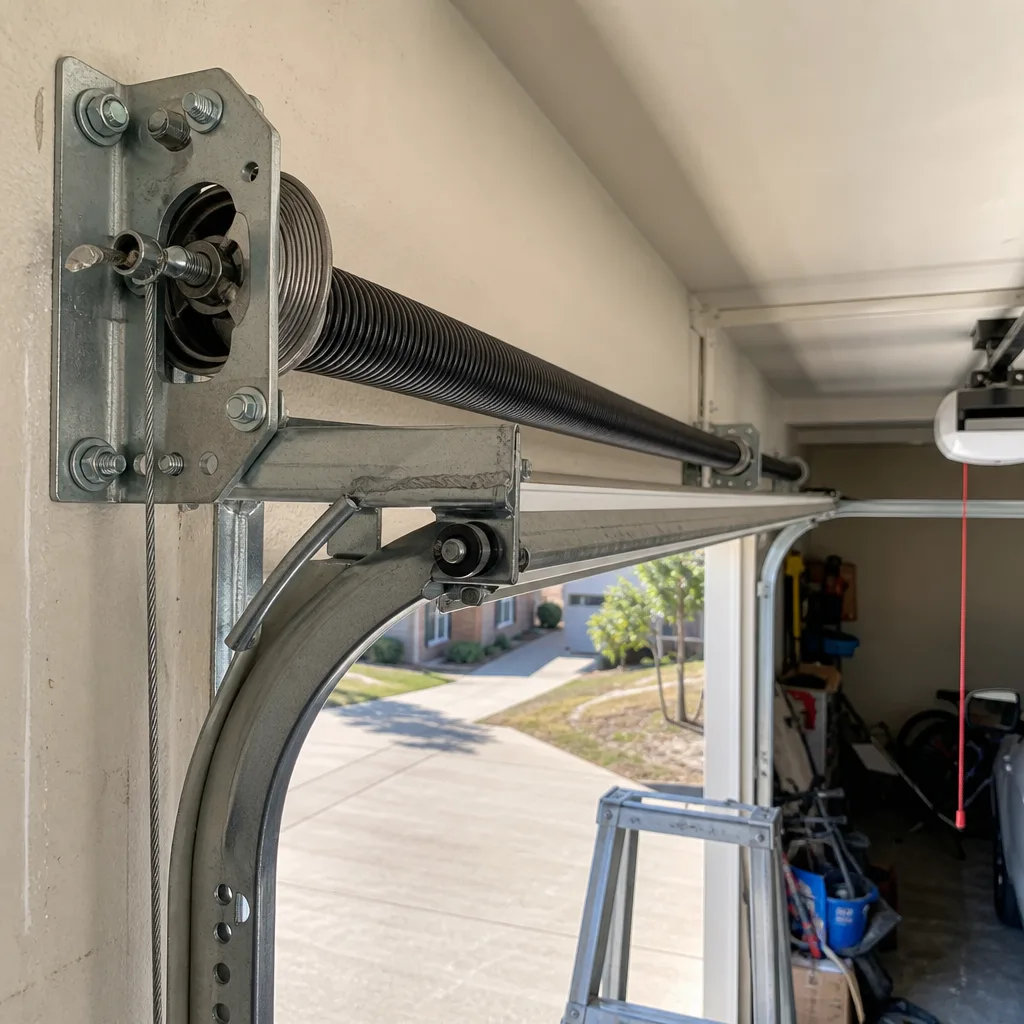
- Look at the spring. Stand inside the garage with the door closed and look up at the torsion spring above the header. You’re looking for a visible gap in the coils, rust, or a spring that looks “stretched” on one side. If you see a gap wider than a quarter inch between any two coils, that spring has already failed and needs replacement before it binds.
- Listen to the door. Open and close it twice. A healthy door makes a smooth, even sound. A door with a dying spring makes a creaking, popping, or groaning noise, especially when the door is halfway up.
- Test the balance. Pull the red emergency release cord and manually lift the door to waist height. It should stay put. If it slams down or flies up, the spring has lost tension and is about to go.
We’ve written about this in more depth on our Garage Door Repair in Lewisville page, but the short version is this: a torsion spring replacement in Lewisville typically runs $180 to $340 depending on spring size and door weight, and it’s a same-day fix if you catch the failure before the spring snaps and takes a cable or bearing with it. The inspection takes five minutes. The repair takes an hour. The emergency call at nine at night because your car is sealed inside and the spring is in two pieces? That’s the one you want to avoid.
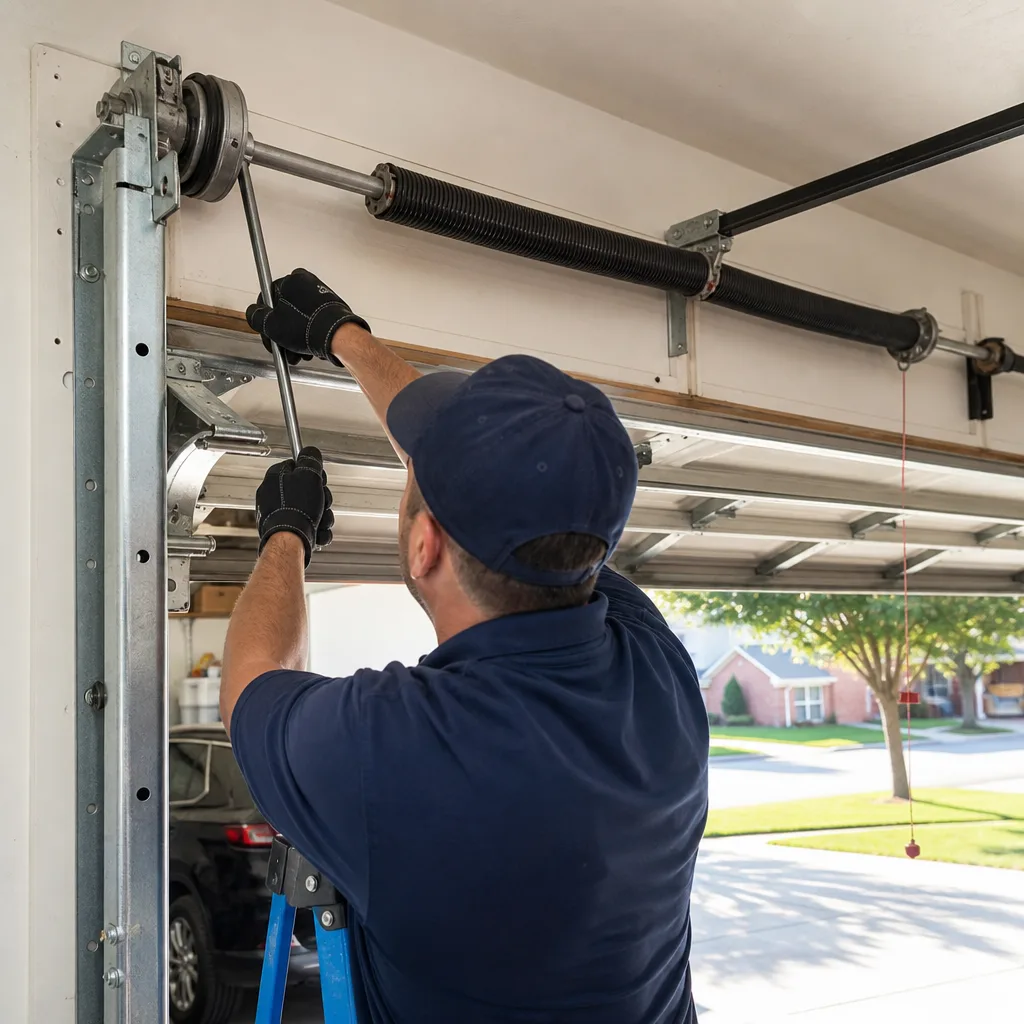
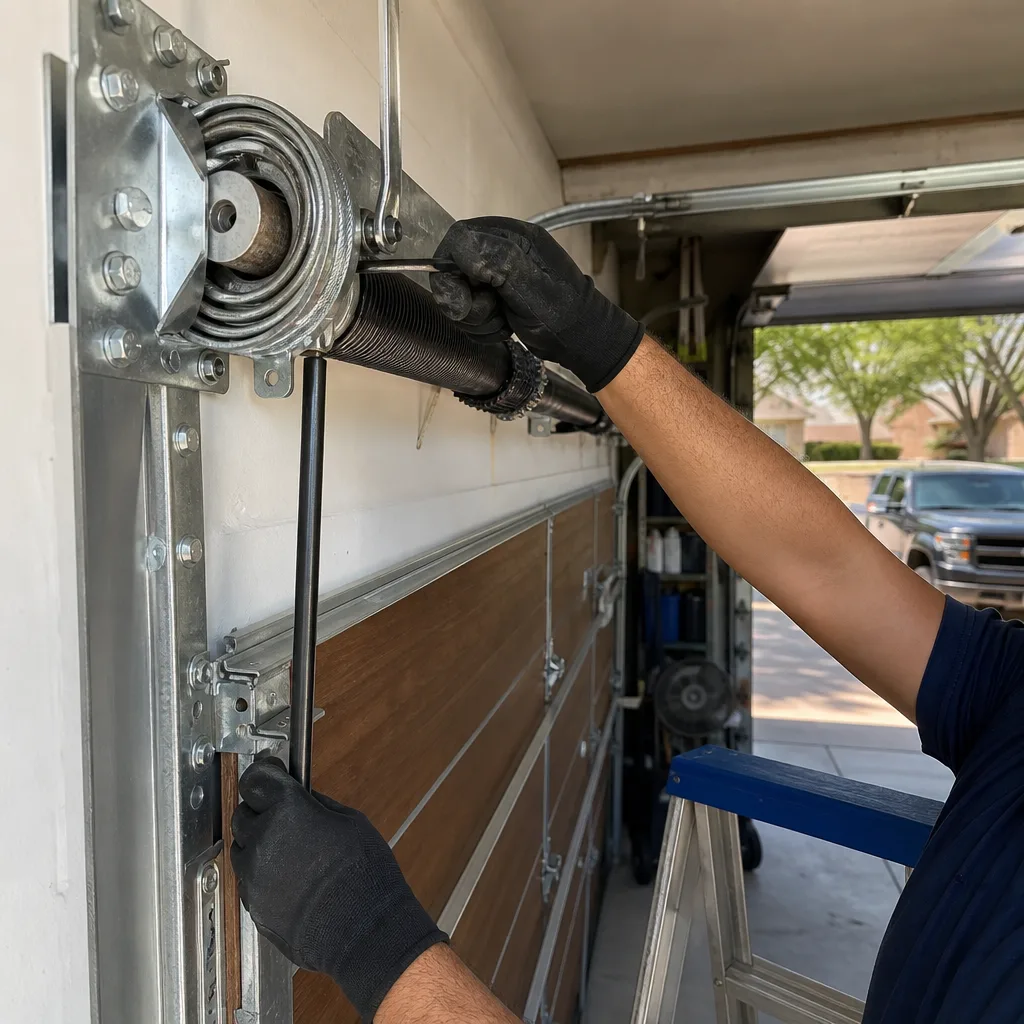
Safety note: A torsion spring is under 200 pounds of tension. Do not attempt to remove, adjust, or replace it yourself. The winding bars can slip, and the spring can release with enough force to break bone. This is the one component on a garage door that genuinely demands a trained professional. Everything else in this guide is homeowner territory. This is not.
March-April: Prepping Weatherstripping for Lewisville’s Wet Spring
Lewisville gets most of its annual rainfall between March and May, and the bottom weatherstripping on your garage door is the only thing standing between that water and everything you store on the slab. The problem isn’t just rot. It’s adhesion. When the bottom seal sits against a concrete slab through a wet spring, dirt and pollen wash underneath it, then the slab heats up in the afternoon and bakes that grime into a crust. The seal sticks to the slab, and the next time the opener runs, the seal tears away from its aluminum retainer. We replace more bottom seals in April and May than any other time of year, and half of them are torn because they glued themselves to the concrete.
The pre-spring weatherstripping routine:
- Clean the slab. Sweep or blow out the area where the door meets the concrete. Pay attention to the corners where leaves and dirt collect.
- Clean the seal itself. Wipe the bottom seal with a damp rag and a little dish soap. You’re removing the pollen film that’s been accumulating since fall.
- Check for cracks and tears. Run your hand along the seal. Any split wider than a coin means water will get through during a hard Lewisville spring storm.
- Look at the side seals. The vertical weatherstripping on the door frame gets brittle in winter cold, then splits when the door flexes. Replace anything cracked before the rain starts.
A new bottom seal for a standard residential door costs about $15 to $40 for the rubber strip, and installation is straightforward if the retainer channel is in good shape. If the aluminum retainer itself is bent or corroded, that’s a slightly bigger job. The seal is sold by width and by shape, so if you’re at the hardware store staring at a wall of T-shaped and bulb-shaped rubber profiles, take a photo of your current seal’s cross-section first. Or call us, describe what you’re seeing, and we’ll bring the right one. We’re fluent in every major brand’s seal profile, from Clopay to Amarr, because we see all of them across Lewisville garages.
May-September: Why Heat Above 95°F Kills Opener Circuit Boards
Everyone worries about cold weather killing car batteries. Nobody thinks about heat killing their garage door opener, but in Lewisville, the summer is far harder on opener electronics than any winter day ever was. Here’s the mechanism: a garage door opener’s logic board sits inside a plastic housing that’s mounted near the ceiling. In an uninsulated attached garage, the air temperature at the ceiling reaches 110°F to 125°F on a 100-degree August afternoon. The circuit board inside that housing runs hot even under normal conditions. When the ambient air is already 120°F, the board’s internal temperature crosses 150°F, and capacitors start degrading. Every summer heat wave shaves years off an opener’s life. We replace openers in late August and September more than any other time, and the failure almost always traces back to cumulative heat damage on the board, not a mechanical fault.
The cheap fix that adds a decade of opener life:
- Install a garage ceiling fan or vent. A basic box fan mounted to blow air across the opener housing drops the local temperature enough to keep the board below its degradation threshold. Cost: under $50. Effect: we’ve seen openers last ten years longer in garages with active ventilation.
- Add a ventilation panel in the upper garage wall if you don’t have one. Passive airflow matters more than people think.
- Insulate the garage door. Not just for the house’s cooling load. A cooler garage means a cooler opener. More on this below.
- Don’t mount the opener in direct sun. If your garage has a west-facing window and the opener hangs in that light path, move it or shade the window.
If your opener is already showing signs of heat stress, like intermittent response, a humming sound without movement, or the light flickering, the board is on borrowed time. That’s when you look at opener replacement, and a good LiftMaster or Chamberlain unit installed in a properly ventilated garage will outlast the one that just failed by a wide margin. Our Garage Door Opener in Lewisville page covers what a replacement actually costs here, and we quote the number on the phone before we ever send a truck.
Summer Cooling: How Door Insulation Affects Your AC Load
An attached garage in Lewisville is a giant thermal mass that sits against one wall of your conditioned living space. When that garage is 110°F inside, the wall between the garage and your house becomes a radiator, pushing heat into your home and forcing your AC to work harder. The garage door is typically the largest single uninsulated surface in that garage. A standard non-insulated steel door has an R-value of about 2. An insulated door with a polystyrene or polyurethane core lands between R-6 and R-18, depending on the panel thickness. That difference translates directly to lower garage temperatures, which translates to less heat bleeding through the shared wall, which translates to a lower AC bill from May through September.
What we tell Lewisville homeowners:
- If your garage is attached and the door is uninsulated, an insulated replacement door or an insulation retrofit pays for itself in comfort long before the energy savings catch up. You notice the difference the first afternoon.
- If your garage is detached, insulation is about protecting what’s inside and keeping the door itself from becoming a heat reflector. It still matters, but the AC argument doesn’t apply.
- Pair insulation with seal maintenance. An insulated door with a torn bottom seal is still leaking heat at the slab. The two things work together.
For most Lewisville homes, the right move is a polyurethane-core door, which gives real thermal break performance and adds structural rigidity. Wayne Dalton and Raynor both make solid polyurethane-core residential doors, and we install both. If you’re unsure whether your current door has any insulation at all, knock on it. A hollow metallic ring means no insulation. A dull thud means it has some. That’s the difference between a garage that hits 120°F in August and one that stays under 95°F.
October: Photo-Eye Alignment Before the Low Winter Sun
Here’s a Lewisville-specific failure that catches people completely off guard: every October, as the sun’s angle lowers toward winter, garage door openers across town start falsely reversing for no apparent reason. The door goes down, hits nothing, and reverses back up. The homeowner calls us thinking the opener is dying. It’s not the opener. It’s the sun.
Garage door photo-eyes are the small sensors mounted on the door tracks about six inches off the floor, one on each side. They shoot an invisible infrared beam across the door opening. If something breaks that beam, the opener refuses to close. That’s a safety feature, and it works great, except when low-angle winter sunlight shines directly into the receiving eye. The sun’s infrared spectrum overwhelms the sensor, the eye thinks something is blocking the beam, and the door reverses. This starts happening in October in Lewisville and continues through February whenever the sun is low enough to hit the sensor at the right angle.
The October photo-eye check:
- Wipe both eye lenses with a dry cloth. Dust and spider webs amplify the false-trigger problem.
- Check the alignment. Both eyes should face each other directly. If one is even slightly twisted, the beam misses the receiver and the door thinks something is in the way.
- Look for loose brackets. A bumped track or a door that slammed a few times can knock an eye out of alignment.
- If the problem happens only at specific times of day, that’s the sun, not the sensor. Shade the receiving eye with a piece of cardboard or a small sun shield. A two-minute fix that saves a service call.
We check photo-eye alignment on every single service visit in October and November because we know the false-trigger season is starting. It’s one of those things that takes thirty seconds to verify and prevents a homeowner from thinking their opener is broken when it’s just doing its job too well.
The Twice-a-Year Lubrication Routine That Doubles Hardware Life
A garage door has about a dozen moving metal-on-metal contact points: four hinges per section, two rollers per side, a bearing at each end of the torsion spring shaft, and the spring itself. Every one of those points is grinding metal whenever the door moves. Lubrication is the difference between a door that runs quietly for twenty years and one that eats rollers and hinges every five. In Lewisville’s climate, the right schedule is March and October. March gets the door ready for the wet spring. October gets it ready for the dry winter, when things get cold enough to make unlubricated parts stick.
The right way to lubricate a garage door:
- Use white lithium grease or a dedicated garage door lubricant. Never WD-40. WD-40 is a solvent, not a lubricant, and it strips whatever protection the parts still have.
- Apply a small amount to each hinge pivot point. You’re looking for the pin where the hinge folds, not the flat face.
- Lubricate the rollers. If you have nylon rollers, lube only the bearings where the wheel meets the stem. If you have steel rollers, lube the bearing and the wheel surface lightly.
- Lubricate the torsion spring. Run a thin bead along the coils while the door is down. The spring coils rub against each other under tension, and a dry spring grinds itself apart over time.
- Lubricate the opener rail if you have a chain-drive or screw-drive opener. Belt drives don’t need it.
- Wipe off excess. Too much grease attracts dust, and dust turns into grinding paste.
Five minutes, twice a year. In our experience, a door that gets this routine lives twice as long as an identical door that doesn’t. The springs fail less often, the hinges stay quiet, and the opener isn’t fighting increased friction. If you’ve never lubricated your door and it’s been installed for more than three years, expect the first cycle after lubrication to be noticeably quieter. That’s not a trick. That’s what a maintained door sounds like.
Month-by-Month Checklist for Lewisville Homeowners
Here’s everything in this guide compressed into a calendar you can tape to the garage wall. We built this specifically for Lewisville’s climate, not for a generic “four equal seasons” model that doesn’t apply here.
January
- Inspect torsion springs for gaps and rust (winter is still spring-snapping season).
- Test door balance with the emergency release.
- If the door reverses unpredictably, check for low-sun photo-eye interference.
February
- Repeat spring inspection. This is the peak failure month in Lewisville.
- Check cables for fraying. A frayed cable is a warning shot before a spring fails.
- If you hear popping when the door moves, call before the failure strands your car.
March
- Spring lubrication day. Full routine from the section above.
- Clean weatherstripping and the slab where the door meets concrete.
- Check for torn bottom seal before rain season starts.
April
- Inspect weatherstripping after the first heavy rain. Look for standing water penetration.
- Check that the door’s drainage channels are clear.
- Lubricate hinges after the first wet weeks if you hear squeaking.
May
- Start of heat season. If your garage is uninsulated and attached, check the door’s insulation level.
- Verify the opener’s ventilation. A hot opener is a dying opener.
- Test the auto-reverse safety feature (door should reverse when it hits a 2×4 lying flat).
June
- Check weatherstripping for heat warping. Rubber bends in 100°F heat.
- Apply silicone spray to weatherstripping to prevent sticking to the slab.
- If the door bangs more loudly on hot days, it may be metal expansion. Note it and mention it on your next service call.
July
- Hottest month. Check garage temperature at opener height. Above 115°F means ventilation needed.
- Inspect opener belt or chain for slack. Heat causes chain stretch on older units.
- Test photo-eyes again. July sun angle can interfere on south-facing garages.
August
- Peak opener failure month. If yours is acting intermittent, it’s the heat. Plan replacement before September.
- Check springs for heat-related fatigue. Hot steel under tension accelerates micro-cracking.
- Inspect rollers for flat spots. Heat makes cheap rollers soft and they deform.
September
- Post-summer inspection. Check everything that heat may have degraded.
- Test door balance. Summer heat cycles can loosen spring tension slowly.
- If your opener died this summer, this is the month to replace it. We see a replacement surge every September.
October
- Fall lubrication day. Full routine again.
- Photo-eye alignment and cleaning before low winter sun arrives.
- Check weatherstripping for heat damage from summer and replace before cold rain.
November
- First cold snaps. Listen for unusual spring noise and test door balance.
- Check that the door seals tightly at the bottom. Cold air intrusion starts now.
- Lubricate the opener chain if it’s been noisy.
December
- Final spring inspection before the February failure window.
- Check cables and pulleys for winter corrosion.
- Test the auto-reverse feature again. This is the season for safety checks.
Common Mistakes to Avoid
- Using WD-40 on the door. WD-40 strips lubrication and actually accelerates wear. Use white lithium grease or a garage door specific lubricant. We’ve seen doors where this mistake alone took years off the hardware.
- Ignoring spring noise in January and February. That popping sound is the spring telling you it’s about to fail. Waiting means the failure happens at the worst possible moment, like a Monday morning when the car is inside.
- Waiting until summer to replace a heat-damaged opener. By August, the board has already degraded. Replace in spring or early fall when the temperature stress is lower and the opener isn’t fighting both heat and age.
- Pulling the emergency release while the door is open. A door with a broken spring can come crashing down when the release is pulled. Always pull the release with the door in the down position unless you know the spring is intact.
- Replacing just one torsion spring on a two-spring door. Both springs have the same cycle count. If one broke, the other is equally fatigued and will fail within months. Replace both at once, and a good installer will recommend exactly that.
- Ignoring a door that reverses near the floor in winter. That’s the low-sun photo-eye issue, and homeowners sometimes jam the door down manually instead of fixing the sensor. Never override a safety reversal system. Shade the eye or call a professional.
When to Call a Professional
A torsion spring is broken and the door won’t move. A cable has slipped off the drum or is fraying. The door is off its track and binding. The opener is making grinding noises or the door is reversing without obstruction and you’ve already cleaned the photo-eyes. Any of these means stop, leave the door alone, and call someone who does this every day. Otto’s Garage Door offers free estimates in Lewisville, and a live person answers the phone around the clock, at (945) 777-4998. If you’ve got a written estimate from someone else, bring it up. Our Free Second Opinion means exactly what it says, and there’s no trip charge inside the county. We’d rather fix it right the first time than fight an invoice adjustment later.
Frequently Asked Questions
Twice a year, in March and October. Lewisville’s two stress seasons are the wet spring and the hot summer-to-cold-winter transition, and lubrication timed to those windows protects the hardware when it’s taking the most abuse. Five minutes per session is all it takes. If you’re hearing squeaks between sessions, the door is telling you it’s dry. Call (945) 777-4998 and we’ll walk you through it or come do it for you.
The freeze-thaw cycle. Warm afternoons expand the steel, cold nights contract it, and a spring under 200 pounds of constant tension develops fatigue cracks through those repeated cycles. February in Lewisville is the peak failure month because the spring has been through weeks of this daily expansion and contraction. We see more spring replacements in February than any other month. If your door is creaking or popping, call (945) 777-4998 before the spring snaps and strands your vehicle inside.
Yes, and more than cold ever does. The opener’s circuit board sits near the ceiling in garage air that can hit 120°F in August, pushing the board’s internal temperature past the point where capacitors degrade. Heat-damaged openers fail intermittently, then permanently, usually in late summer. Adding ventilation or a fan near the opener is a cheap fix that can extend opener life by years.
Torsion spring replacement typically runs $180 to $340, opener replacement $300 to $600 including labor, and weatherstripping replacement $100 to $250, depending on the door. See our Garage Door Cost Breakdown: The Lewisville Homeowner’s Reference for 2026 for full pricing details. These are Lewisville market prices, not national averages, and they assume a standard residential door. The number we quote on the phone is the number we hold at the door, written on the invoice before any work starts. Call (945) 777-4998 for an exact quote, and the estimate is free.
No. A torsion spring holds enough tension to break bones if it releases while you’re working on it. The winding bars can slip, the cone can shatter, and the consequences are permanent. Everything else in this guide is homeowner maintenance. The spring is the one component that requires a trained professional with the right tools and experience. We replace them safely every day, and we’d rather you call us than end up in urgent care.
Yes, a live person answers 24/7, including nine at night when a spring lets go and your vehicle is sealed inside. Often it’s Otto himself on the line, quoting the repair price right then and holding that same number when he arrives. That’s how he’s done it since 2004, and it hasn’t changed. Call (945) 777-4998 any time and you’ll talk to a human being who knows Lewisville garages.
The Bottom Line
Lewisville garage doors take their worst damage in February, not because of ice but because of weeks of freeze-thaw cycling on steel under tension. The next biggest threat is summer heat, which quietly kills opener circuit boards and turns uninsulated attached garages into heat chambers that load up your AC. The care calendar is simple: inspect springs every winter month, lubricate every March and October, protect weatherstripping before spring rain, ventilate before summer heat, and align photo-eyes before the October sun angle shifts. Fifteen minutes a month, concentrated in the months that actually matter, prevents most of the emergencies we roll out for. If something’s beyond a homeowner’s maintenance routine, call a pro you can verify, or explore more guides & resources on our blog. Otto Reinhardt has been at this in Lewisville since 2004, and the name on the van is the name on the license and the invoice. Call (945) 777-4998 for a free estimate, and if it’s written down, the price won’t change between the phone and the driveway.
Written by Otto Reinhardt, Owner at Otto’s Garage Door, serving Lewisville since 2004.