
Full 25-point door and opener safety check with every visit - springs, cables, rollers, tracks, and your LiftMaster or Chamberlain opener included
You get a price before we start. It does not change when the truck arrives.
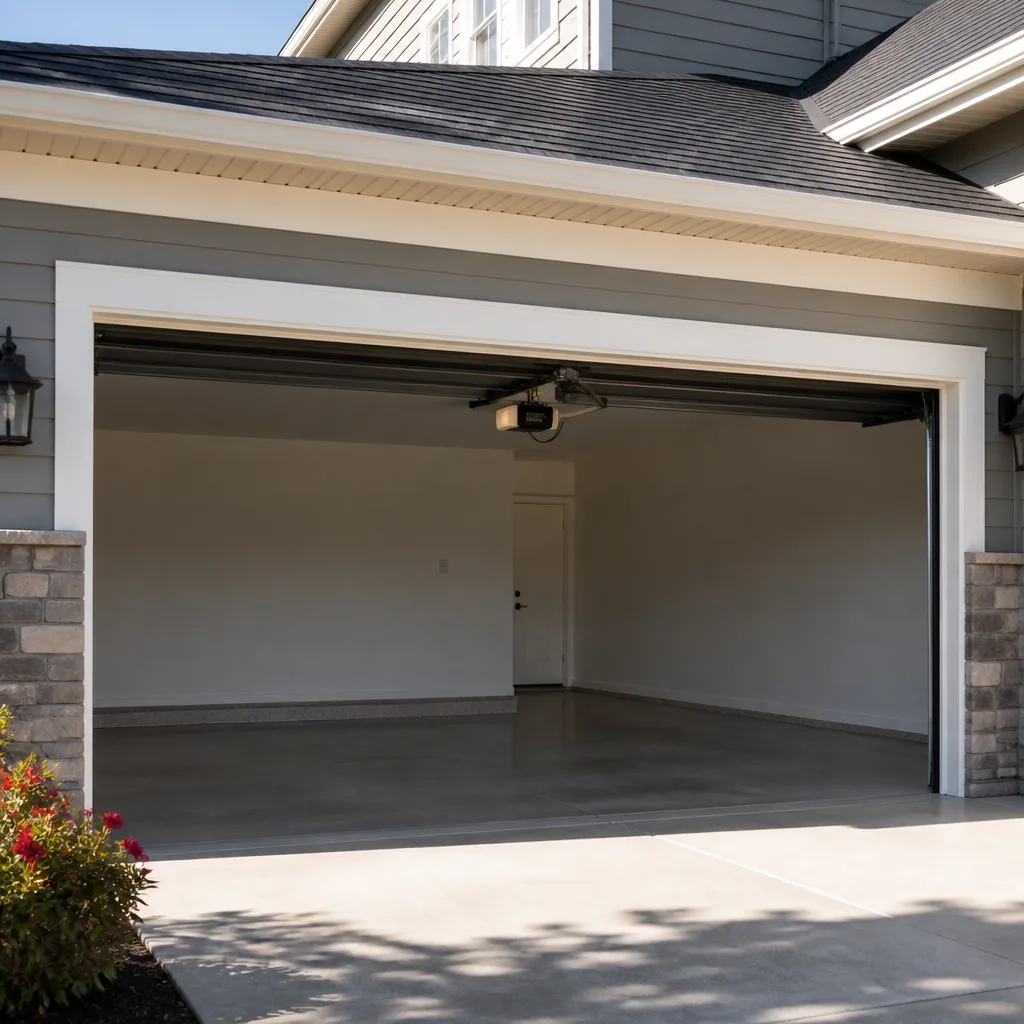
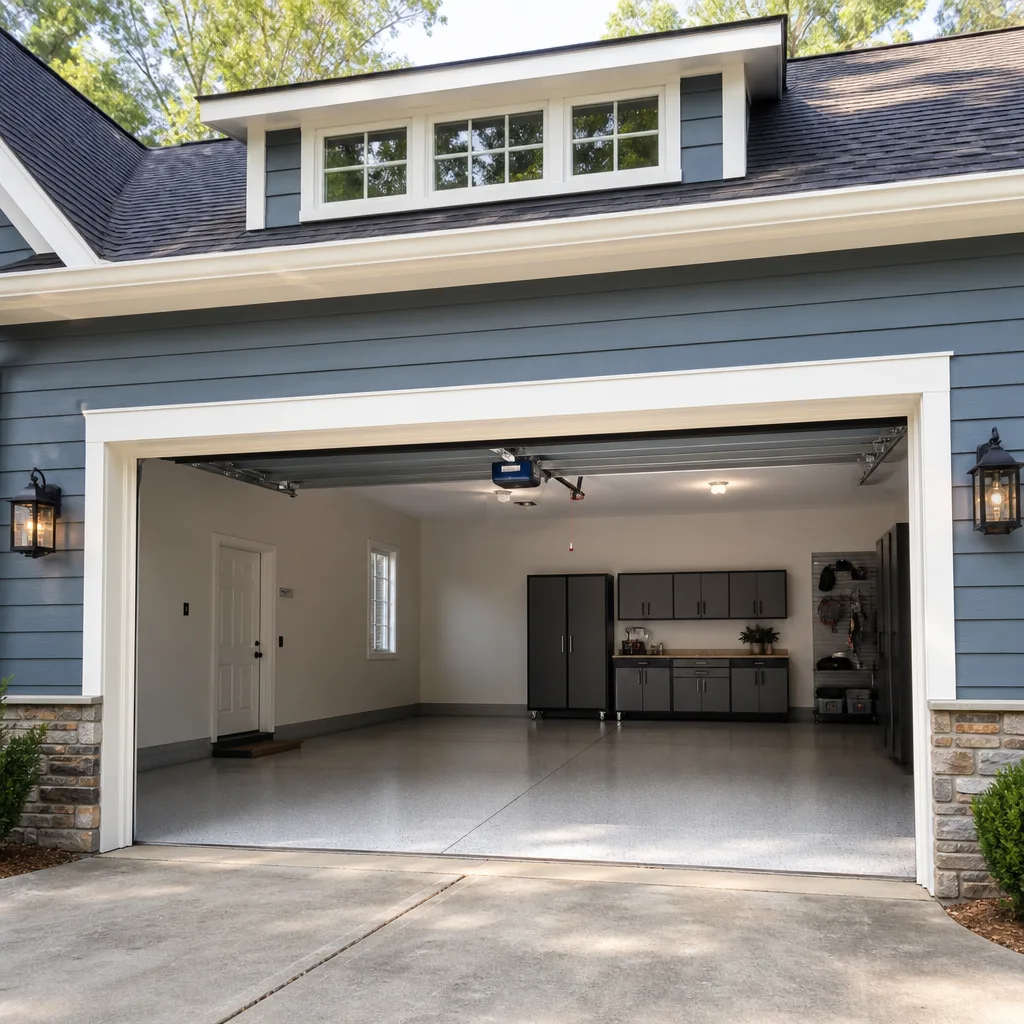
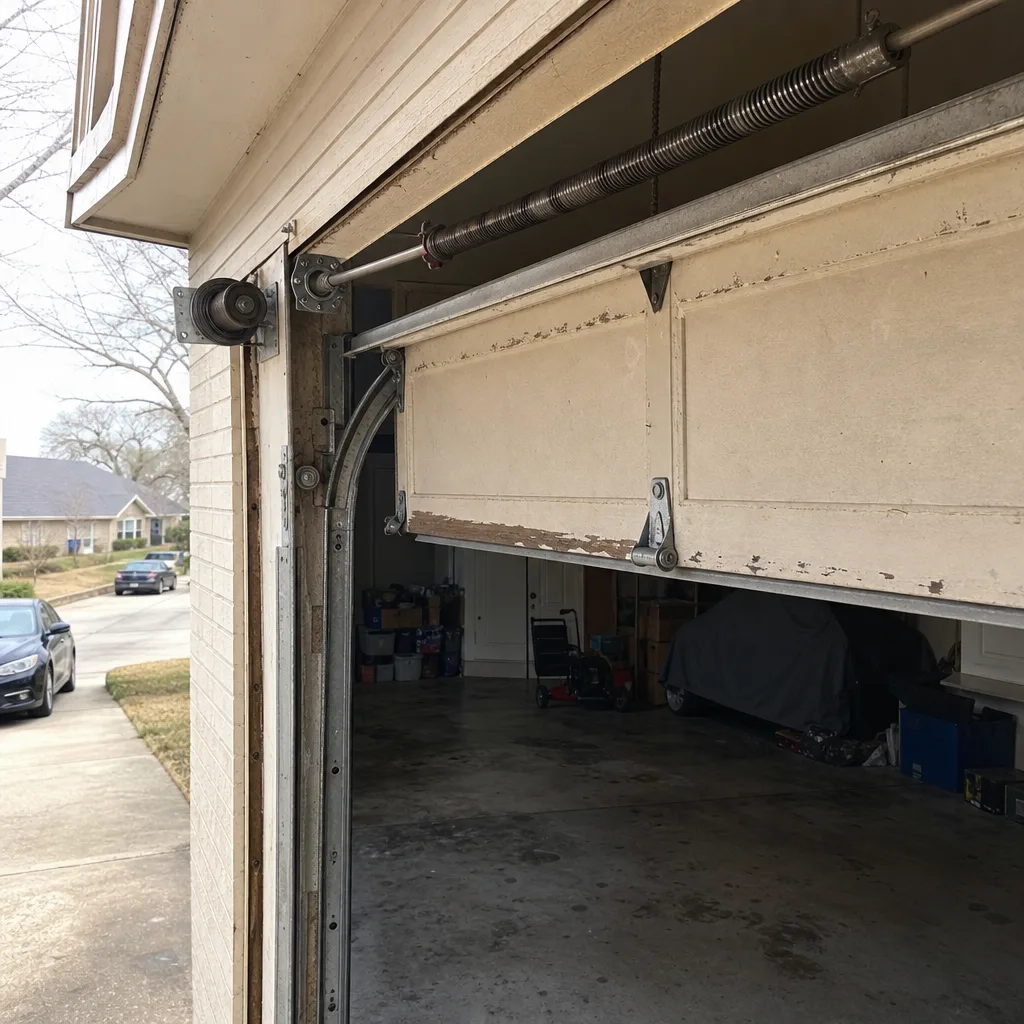 Before
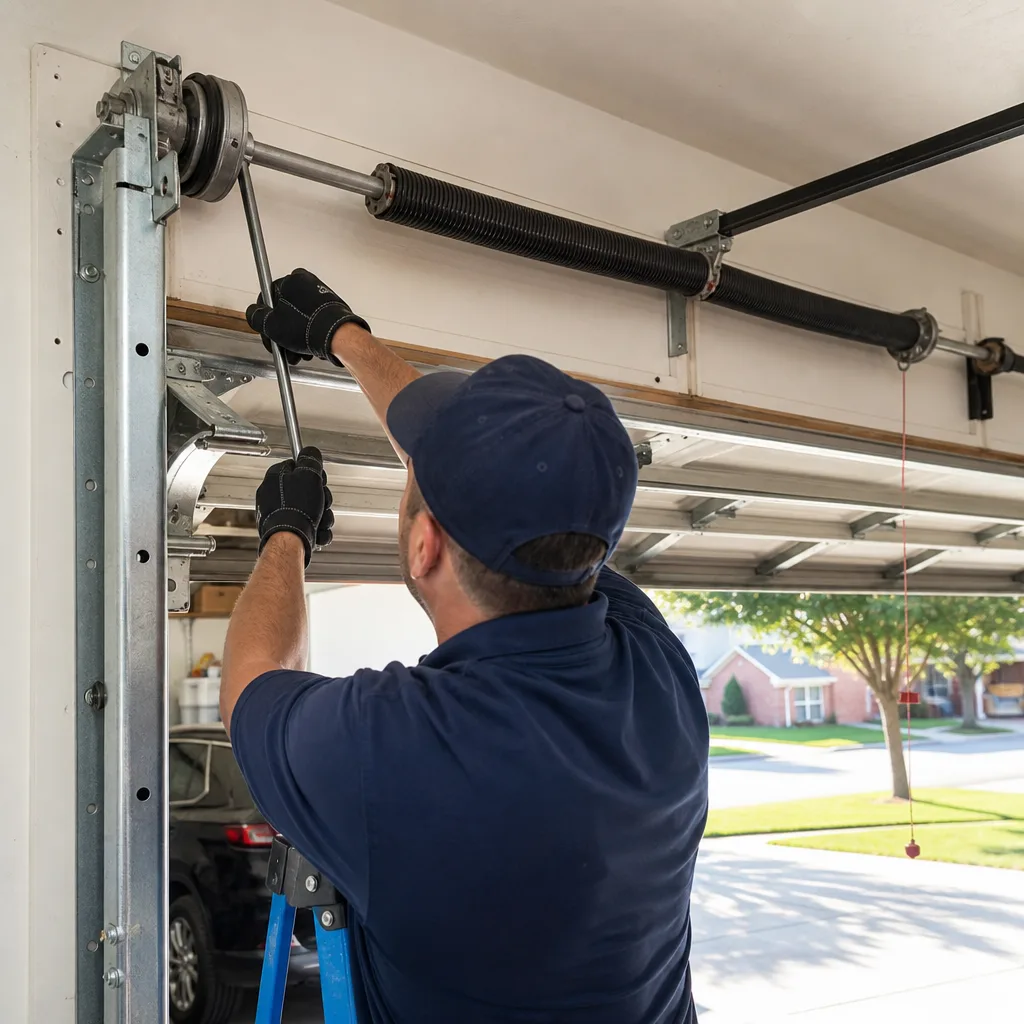 After
After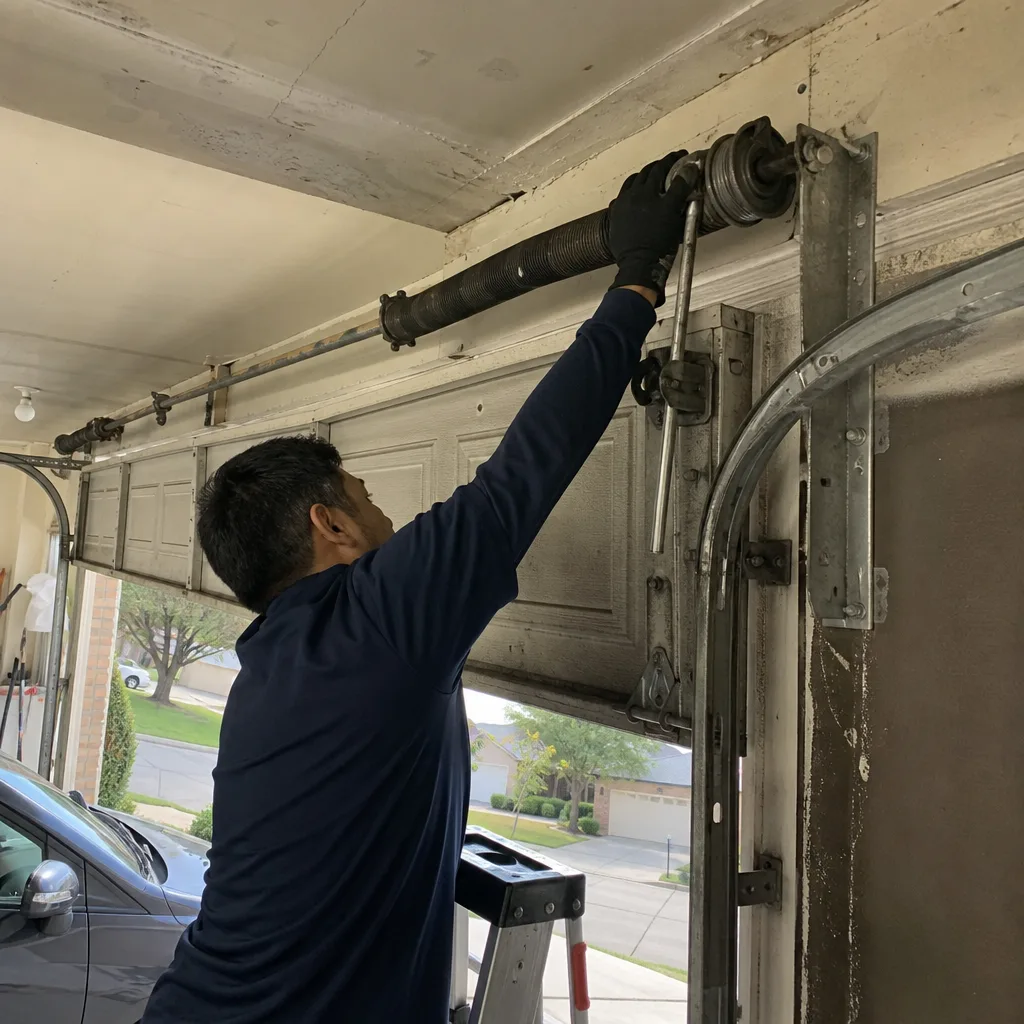 Before
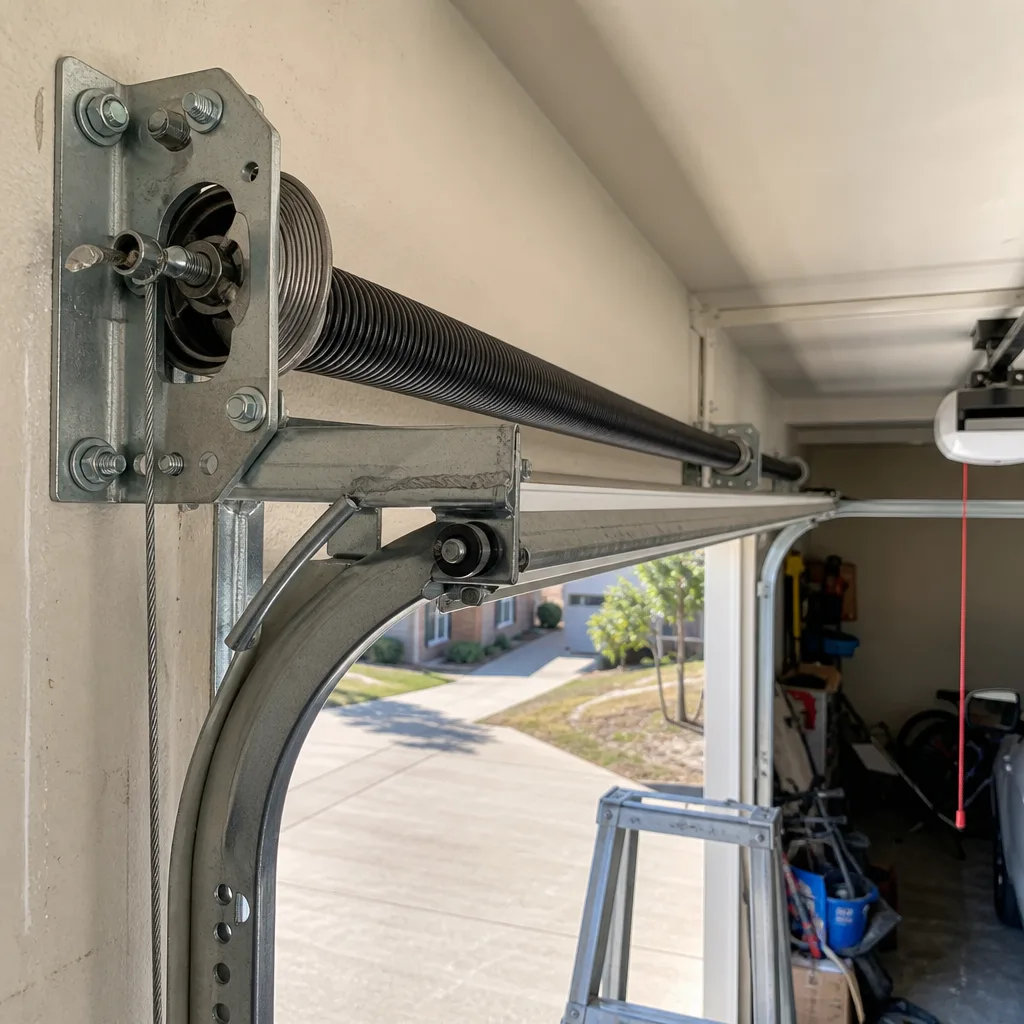 After
After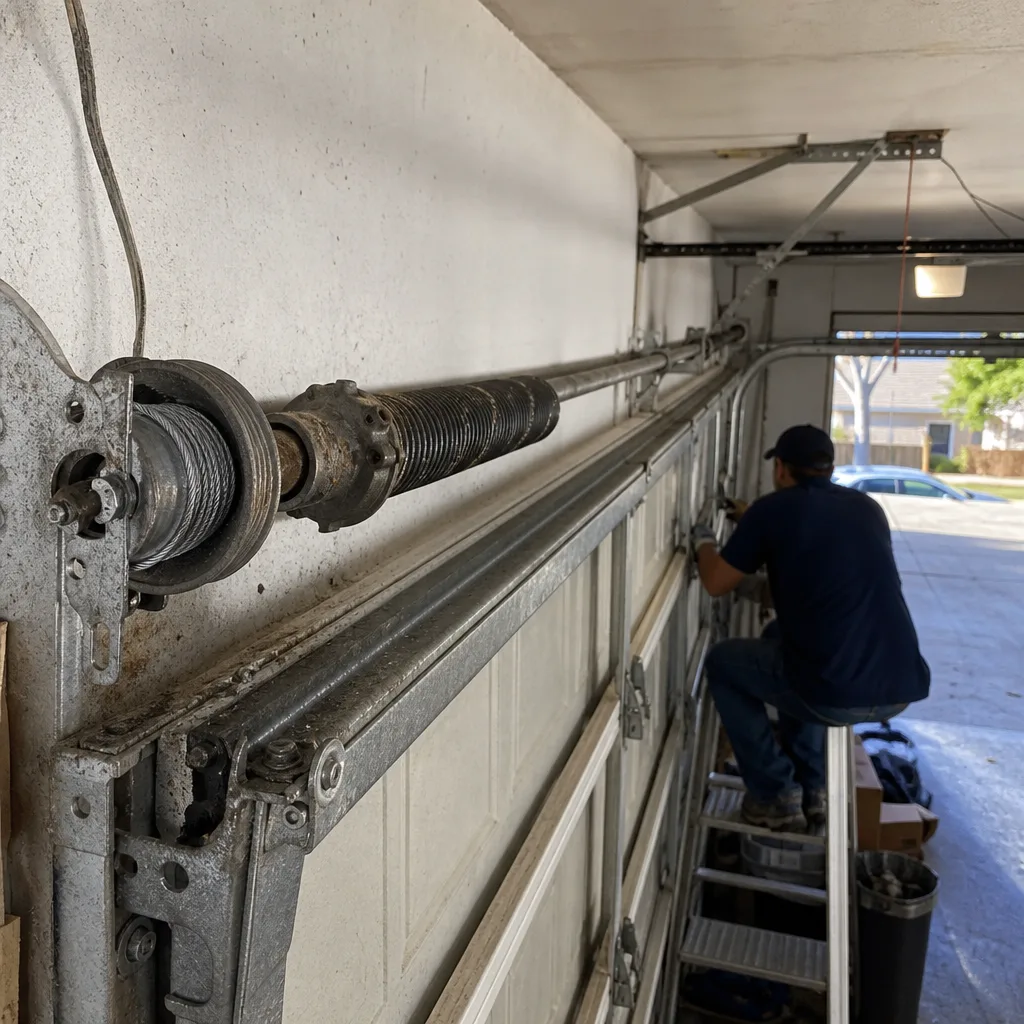 Before
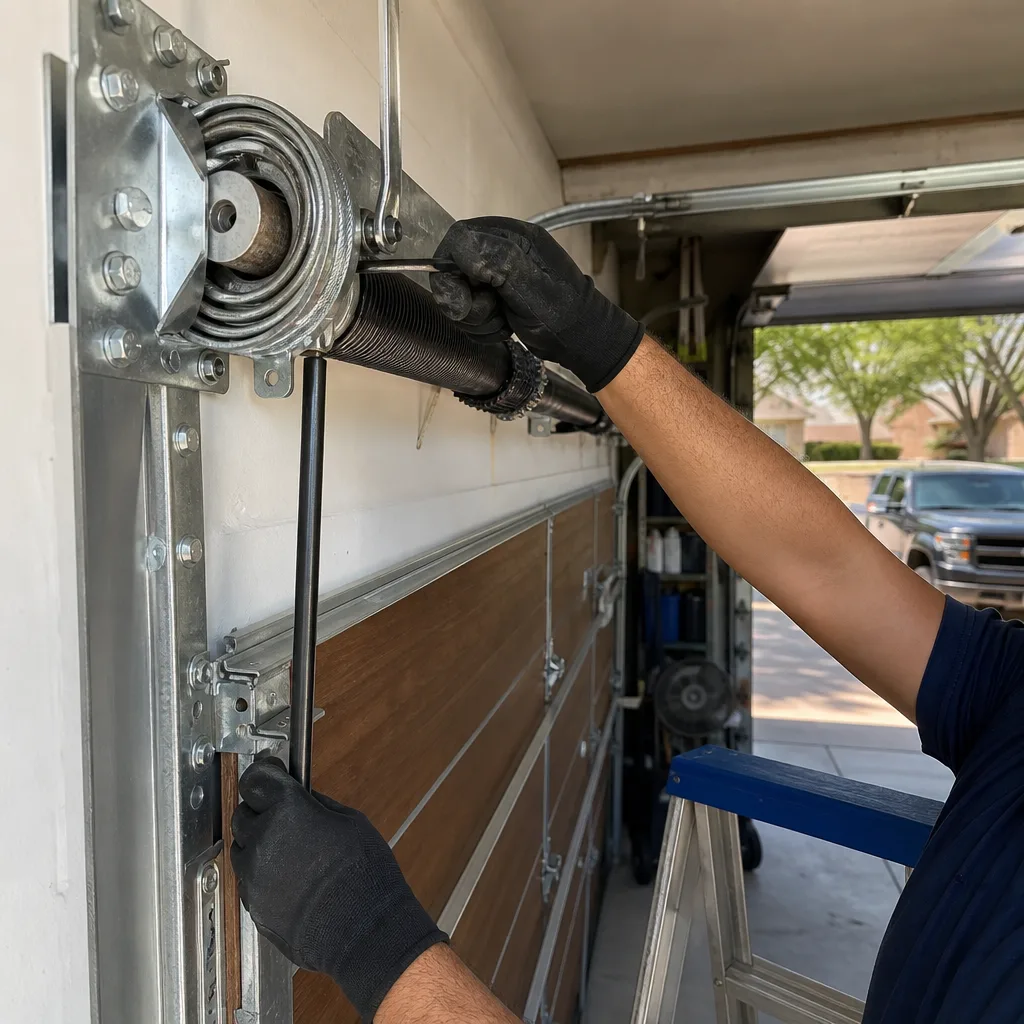 After
AfterGenie Roller Replacement: The Lewisville Owner’s Guide
We stock Genie-compatible rollers on the truck and install them across Lewisville for $110-$220, typically in under an hour. That’s the part, the labor, and a 90-day written guarantee, all priced before we open the door. Most folks discover they need a roller replacement when the door starts sounding like a freight train, binds mid-lift, or jerks up the track instead of gliding like it used to.
A Genie door rides on rollers, and when one of those rollers gives out, the door doesn’t just get noisy. It gets angry. Nylon rollers wear to the metal core, steel rollers chew up track, and every cycle after that is doing slow damage to the hinges, the operator, and eventually the spring. In Lewisville’s heat, plastic parts age faster than the manufacturer’s lab ever planned for.
Which Genie Models This Applies To
Most Genie residential doors built in the past 20 years, including the IntelliG, ReliaG, and TriloG series paired with Genie door hardware, use a standard 2-inch roller that fits residential vertical tracks at 15-inch radius. Older Genie doors from the 1990s sometimes run a smaller wheel or a stem length that changed between manufacturing runs, and that’s where generic parts get a homeowner into trouble.
Here’s the gotcha most people miss: Genie built doors under contract through several different door manufacturers over the years. The opener says Genie, but the door section might be Clopay, Amarr, or Wayne Dalton. The roller specs come from the door, not the opener. If you order a roller based on the Genie logo on the motor, you’re guessing. We verify the actual measurements on site: wheel diameter, stem length, and post count. We also see a lot of Genie doors in Lewisville running oversized 3-inch wheels on high-lift tracks near the lake homes, and those need a different assembly than the standard 2-inch roller people grab off a shelf.
As for the part itself: OEM Genie rollers are solid. Quality aftermarket equivalents, especially sealed-bearing nylon from a proper supplier, perform just as well and in some cases better because the bearing is replaceable as a unit. Cheap aftermarket with unsealed bearings fails inside two Texas summers. We choose the roller based on your door’s cycle count and the track condition, and we’ll tell you what we’re putting in and why before we touch a bolt.
Signs Your Genie Roller Replacement Is Failing
- A grinding or squealing noise that follows the door as it moves. That’s the bearing inside the roller gone dry or seized. Once the bearing locks up, the wheel starts shaving the edge of the track. You’re no longer rolling. You’re scraping.
- The door stutters or twitches on one side during travel. One roller is collapsed or cracked, which forces the section it carries to ride flat against the track instead of rolling through. A roller that stops turning becomes a brake, and that brake is wearing a flat spot into the rail.
- Visible metal shavings or fine dust along the bottom track. Sealed roller bearings shouldn’t shed. When they do, the grease is gone and the metal is eating itself. If you see black dust or silver metal dust in the track, the stock roller has already failed.
- The door hangs at a slight angle, or the gap at the floor varies left to right. A broken or separated roller on one side means the door’s weight isn’t balanced across the track, and a 200 pound door sitting crooked is hard on every hinge point in the chain.
- The opener itself starts working in jerks, or reverses partway down. If the force sensor keeps tripping, the problem is almost never the opener. The door’s friction has gone up because a roller is far gone. People throw a new Genie operator at a door with bad rollers and wonder why the new one strains like it’s dragging a bucket. Fix the rollers first.
Replacement Cost & What’s Included
In Lewisville, full roller replacement on a typical two-car Genie door runs $110-$220 installed. A single-door swap is on the lower end of that range. Doors with 10 rollers, high-lift track, or oversized 3-inch wheels land higher. We quote the exact number on the phone or at the door before any work starts, and that number does not move once we begin.
Here’s what you’re actually paying for, and we’ll put it in writing before we touch anything:
| What’s included | Typical range |
|---|---|
| All rollers replaced (standard 2-inch nylon, sealed bearing) | $55-$90 in parts |
| Labor, typically 45-60 minutes | $55-$130 |
| Track inspection and lubricant (graphite or white lithium, no WD-40) | Included, no line-item |
| 90-Day Done Right Promise in writing | Included, no line-item |
We don’t sell roller replacement as a parts-only line item, because a roller that’s installed wrong or matched to a worn track will fail twice as fast. You pay for the part and the job, not a service charge, not a “diagnostic fee,” not a surprise disposal line. And if a roller we installed fails inside 90 days, one call brings Otto back. No runaround, no argument, no “oh, that’s normal wear.”
DIY or Call Us?
Let’s be honest about what’s dangerous and what’s not. Roller replacement itself is not a high-tension job like spring work, but it does put your hands directly in the path of a 200 pound door. The bottom roller bracket on most Genie-installed doors is bolted to the section under load. If you unbolt that bracket while the door is under tension and the cable slips, that door can drop and take your hand or arm with it. We’ve seen it. We’ve also fixed the mess it leaves behind.
Your real fix isn’t unbolting the bottom bracket. It’s taking the tension off the spring, securing the door, and swapping the roller with the right tools and the right bearing spec. There is no version of that job we’d tell a homeowner to rush on a Saturday afternoon with a pair of adjustable wrenches. If the door is noisy and the rollers are shot, don’t YouTube your way around a spring under load. Call (945) 777-4998 and let Otto or one of his guys take the tension off properly. You’ll get your Saturday back, and the door will work right.
FAQs
Standard stock rollers on a Genie door last 5 to 7 years in Lewisville’s heat and humidity. Sealed-bearing nylon replacements typically last 10 to 15 years, sometimes longer. If your door cycles four or more times a day, expect the low end of any range, and we’ll tell you that straight before you spend the money. Call (945) 777-4998 and we’ll give you an honest estimate based on your actual door, not a brochure.
No. Once a bearing is seized or the wheel is split or shaved flat, the roller is dead. There’s no repacking a sealed bearing and no safe way to re-true a shaved wheel. The only fix that saves you money long-term is replacing the full set at once, not one-at-a-time, which is exactly what we recommend and quote. Call (945) 777-4998 for a straight answer on whether yours can wait or need it now.
A full roller swap on a standard two-car Genie door takes 45 to 60 minutes, start to finish, including cleaning and re-lubing the track. We carry rollers for Genie, LiftMaster, and Chamberlain doors right on the truck, so there’s no second trip and no waiting on a warehouse. Call (945) 777-4998 and we’ll give you a window, not a vague “sometime Tuesday.”
We stock Genie-compatible rollers on the truck, including standard 2-inch sealed-bearing nylon and the 3-inch high-lift variants. We’re an independent shop, not a Genie dealer, which means we source the best part for your door rather than the part Genie’s catalog insists on. If we don’t have a rare size, we’ll know within an hour and have it ordered the same day. Call (945) 777-4998 and we’ll tell you what’s on the truck before we head your way.
Written by Otto Reinhardt, Owner, Otto’s Garage Door - Lewisville, TX at Otto’s Garage Door, serving Lewisville and nearby areas.